
12 brief reviews of books about hope
You will surely have experienced moments where a literary evangelist has brandished a book in your face and said “You must read this!”
Whilst not all will share my fascination with whether or not a hopeful worldview is justified, I remain ever the optimist, hence this online brandishing of not one, not two, but a whole armful of books.
The occasion for this post is that I have been working with my school librarian, Alison Park, to assemble a book display around the topic. The intended audience is children from the ages of about nine to eighteen (and their teachers!), which explains why the reviews are pithy, enthusiastic and broadly positive (although I have made some edits for this post). Deeper critiques relating to my teaching and research on the topic are deserved, but this is not the place for them!

1. ‘Factfulness: Ten Reasons We’re Wrong about the World – and Why Things are Better than you Think’ by Hans Rosling, Ola Rosling and Anna Rosling Rönnlund (Hodder and Stoughton, 2018)
Read this to kick-start your hopeful journey! Most people systematically underestimate the advances that humans have made in recent decades, and this book (and accompanying web resources) argues that such ignorance means that we do not believe that we can change the world. It is also a personal account of Rosling’s career in medicine and public health, and his anecdotes illustrate the various advances that humankind has made in his lifetime, so if you are interested in a career in medicine, then this is well worth a read. Whilst it does acknowledge the very real threat of climate change, it underplays it, and it also fails to communicate the persistence and scale of the extreme economic inequalities in the world. Nevertheless, it is the one book of all the ones covered here which I recommend the most highly.

2. ‘Hope in the Dark – Untold Histories, Wild Possibilities’ by Rebecca Solnit (Canongate, 2016)
Do you think that taking action is futile? Think again! Read this to be get roused to fight for social justice. Solnit attacks defeatism and draws upon several successes which you may or may not have heard of, from racial to gender rights and plenty of other battles. Rich in anecdotes but thin on statistics, Solnit gets the tone just right to give your levels of hope a boost!

3. ‘Good News: Why the World is Not as Bad as You Think’ by Rashmi Sirdeshpande (Wren and Rook, 2021)
Written in an informal, jaunty style, this is great for anyone from Years 5 to 13 – and beyond! Learn about why we should balance the bad news we see in the headlines with a huge range of good news stories from around the planet. It features not only facts and figures but also individual stories to inspire you to approach the world with hope. I learned a lot about the wide range of people and organisations who making a difference across the world to create a brighter future for us all.

4. ‘Enlightenment Now’ by Steven Pinker (Penguin, 2018)
In an era of uncertainty and with many crises facing humanity and the world, Pinker asks us to look at the improvements to our lives that have taken place in recent decades, which have been poorly appreciated and therefore poorly valued. He argues for the somewhat unfashionable concepts of ‘progress’, ‘reason’ and ‘enlightenment’, and he seeks to avoid the despair engendered by voices on the extreme right and left wings who argue that society is declining. Whilst his tone might grate, and his stance on inequality and environmental damage deserve a deeper critique, this is a very engaging and well-researched book.
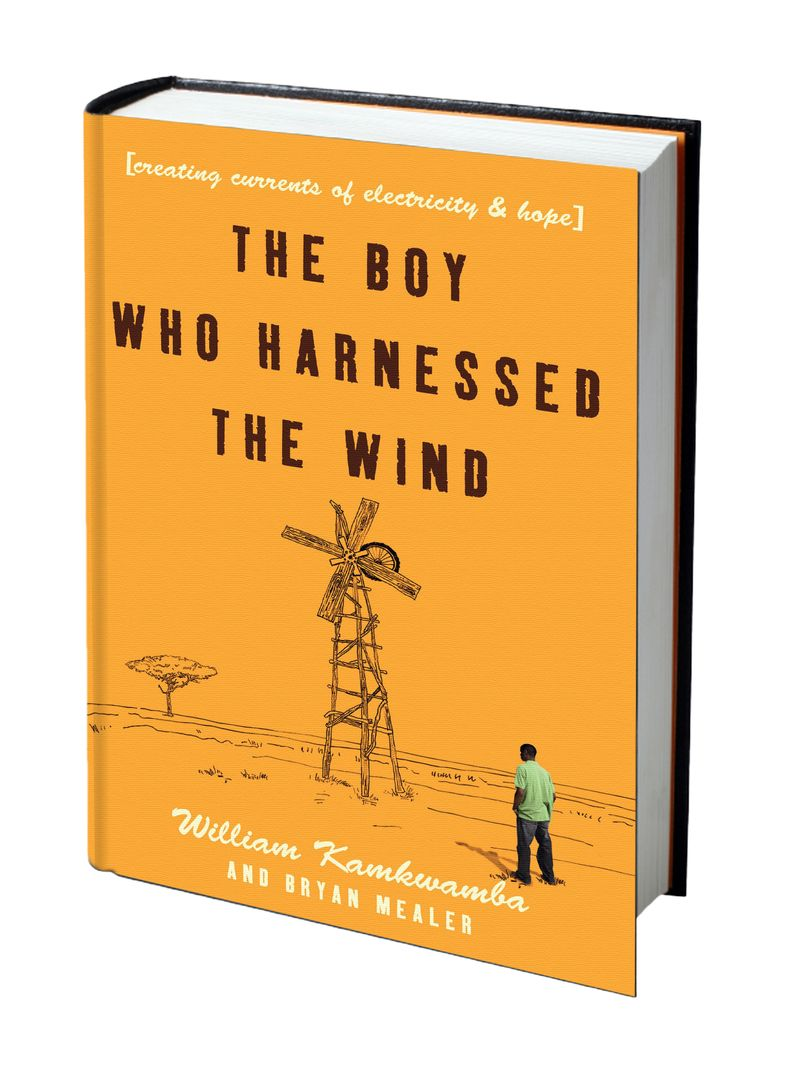
5. ‘The Boy Who Harnessed the Wind’ by William Kamkwamba and Bryan Mealer (Young Readers’ version from Puffin, 2019)
Sometimes, facts and figures can wash over us – we struggle to get a hold of big trends which are improving the lives of so many people around the world, such as the spread of vaccinations, reductions in infant deaths, and the vast reach of electricity throughout the world. At these times, human stories really hit home, and here is one of them. Also a hit movie, this is the true story of a Malawian boy who not only used his ingenuity to supply wind power to his household, but also to his village. A ‘younger reader’ version of this book is also available.
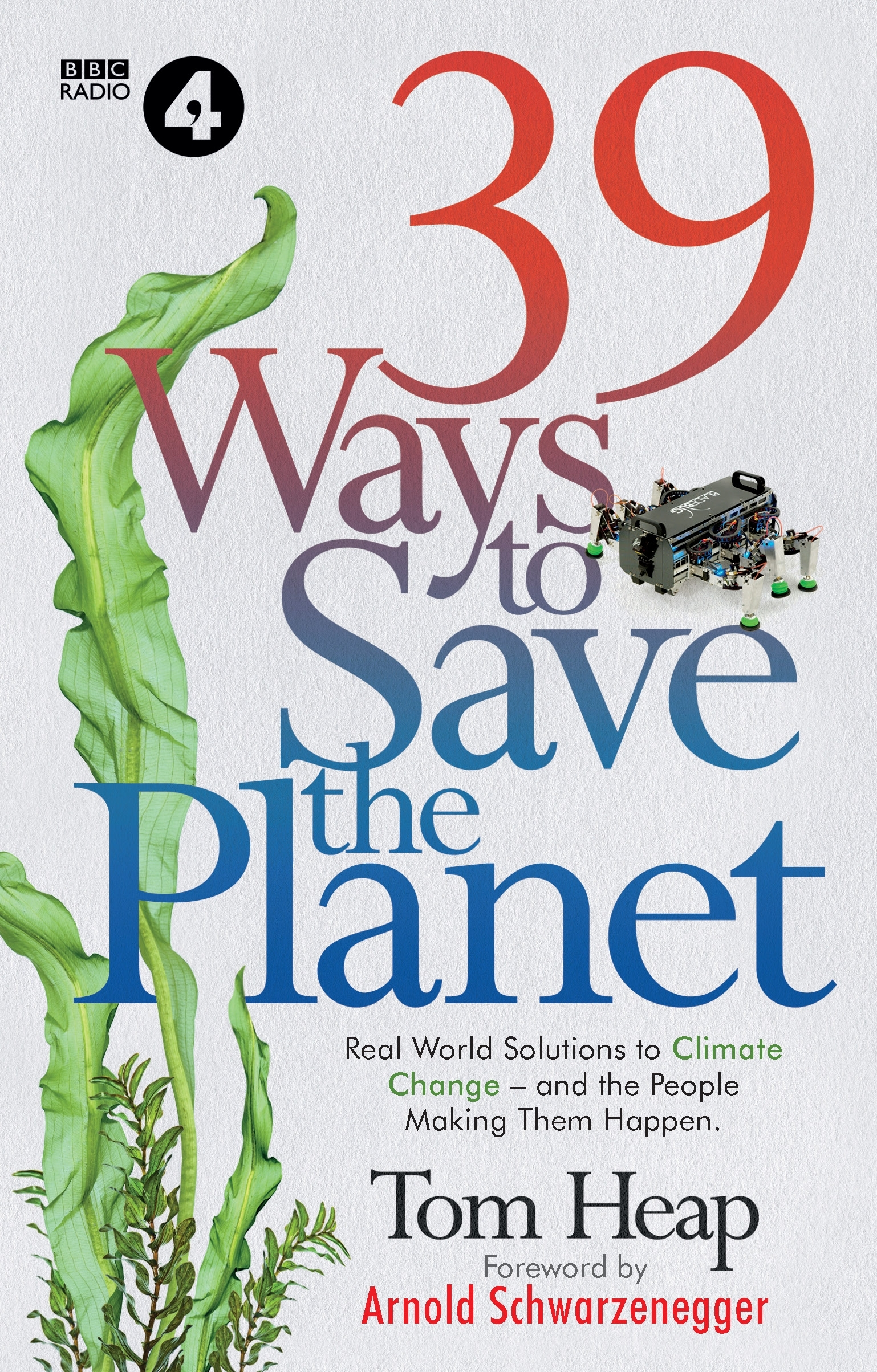
6. ’39 Ways to Save the Planet’ by Tom Heap (Penguin, 2021)
There is no ‘silver bullet’ which will fix the world’s ills, but if we weave together many programmes, initiatives and inventions, we can secure a sustainable and prosperous future for people and the planet. Written around the time of the peak of the Covid-19 pandemic, this book summarises 39 ways in which we can solve the climate, ecological, and other crises facing the world. The book follows a BBC Radio 4 series of 15-minute podcasts, each one covering one of the ’39 ways’, which you can get from your podcast provider. The Royal Geographical Society have also made an accompanying set of educational resources for schools. It steers clear of total technological solutionism by including some more political and social approaches to a brighter – and greener – tomorrow. Read it – or listen to it – and be awed.

7. ‘There is No Planet B’ by Mike Berners-Lee (Cambridge University Press, 2021)
This is written in a very clear and understandable fashion, and it is really useful for those who recognise the necessity of active hope over passive hope and complacent optimism. Unlike many in this selection of books, most space is taken up by outlining the main environmental challenges that the world faces, but it then goes on to give some clear actions which we could all – individuals, companies and governments – could take. I dare you to read it and not be emboldened to take action.
8. ‘Not the End of the World’ by Hannah Ritchie (Penguin, 2024)
I am writing this in advance of its publication, so I hope not to be disappointed. I base my judgement on Ritchie’s output to date, whether it is in Our World in Data, her email newsletter, or her TED talk. The book is set to be one of the most hopeful publications of 2024. Ritchie is a data scientist at Oxford University who writes widely on issues of social and environmental matters. She is still in her twenties, and she identifies with many other young people in that she has experienced anxiety about the future of the world. She now counters this with a more hopeful worldview, built around a richly evidenced argument that we have already been making strides towards a more sustainable future (e.g. with regard to shrinking carbon footprints, increasing life expectancies and rocketing numbers of EVs). She says that hers is not the last generation on earth, but rather it could – and must – be the first generation to live truly sustainably.
9. ‘What We Owe the Future’ by William MacAskill (OneWorld, 2022)
This is the toughest read of this selection of books – the audiobook version (or this book review in The Conversation) might be a great ‘first time through’, before you pick up a printed copy – but it is also the most profound. When we think about the future we often think about the next generation, or perhaps two. But MacAskill says this is like a child preoccupied by the next sugar rush, when they have many years ahead of them. If, as seems likely, humanity survives, and even thrives, in the coming crucial decades in terms of overcoming the climate and ecological crises, then we could have thousands of generations ahead of us. MacAskill argues that we need to ensure that humanity needs to agree upon the best possible rules of morality and behaviour before AI ‘locks in’ such rules, possibly forever.
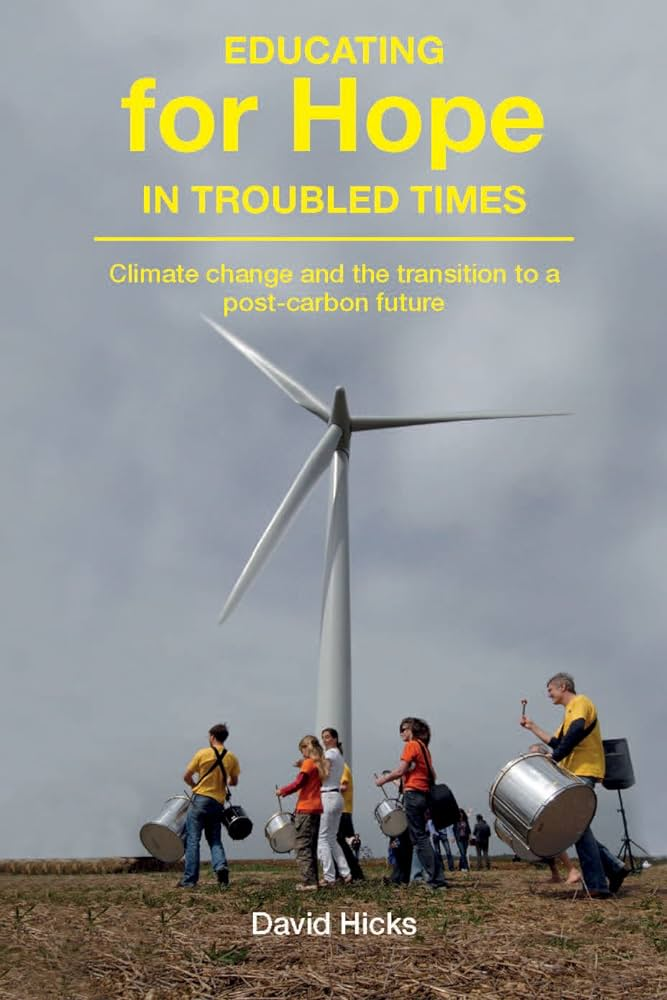
10. ‘Educating for Hope in Troubled Times’ by David Hicks (IoE Press, 2014)
You form so much of your worldview at school. This book looks at how you and your teachers can introduce a ‘futures dimension’ into your learning. The future is not set in stone – your generation will shape it – so we should always learn with the future in mind. Useful for those thinking of entering teaching, careers in sustainability, and those who are not afraid to talk to their teachers about the future! If I was to level one criticism at it (aside from it now being almost ten years out of date, and it shows, with references to ‘peak oil’ and the like), it is that, contrary to its title, it sometimes defaults to a pessimistic view of the future, and that it doesn’t pay enough attention to human ingenuity, scientific research, and the pace of change.
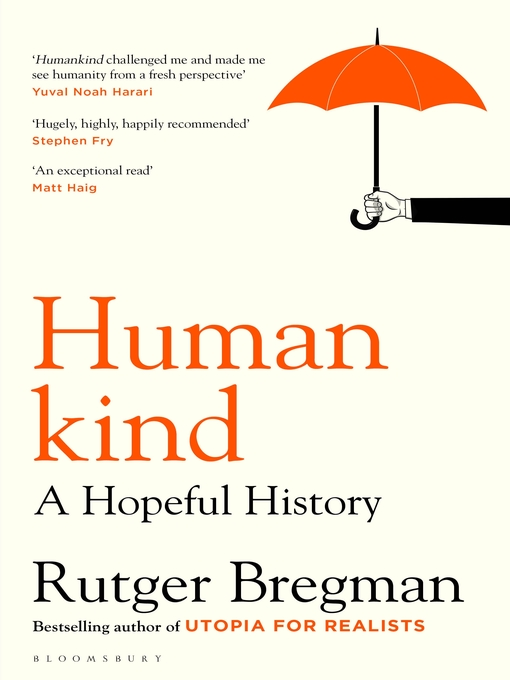
11. ‘Humankind: A Hopeful History’ by Rutger Bregman (Bloomsbury, 2020)
Rutger Bregman is a Dutch writer and historian, who is perhaps best known for pointing out the ‘Elephant in the Room’ at the World Economic Forum in 2019: that if the global 0.1% stopped avoiding tax then we may be able to take a bite out of global wealth inequality. He also supports radical social proposals like a Universal Basic Income. In Humankind, he revisits some of the commonly-held assumptions about how we behave, showing that in times of crisis, rather than reverting to a ‘Lord of the Flies’ state of selfishness and bullying, almost all of us look out for our fellow humans. Moreover, thinking the worst of others affects our politics and economy too: if we assume that most people are selfish and individualistic, then that can make us cynical and reduces our desire to work collectively for the common good. As such, this book is about realistic hope rather than about idealistic hope.
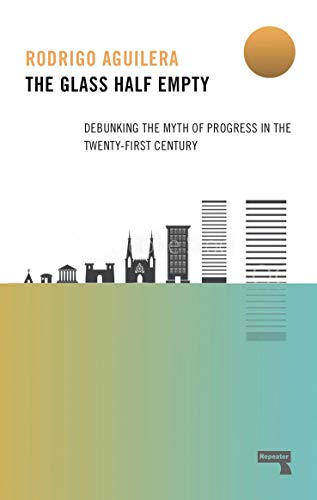
12. ‘The Glass Half-Empty – Debunking the Myth of Progress in the Twenty-First Century’ by Rodrigo Aguilera (Repeater, 2020)
Aguilera adopts a critical stance towards notions of ‘progress’. He looks at the messages of Hans Rosling, Steven Pinker, and the like, and decides that they gloss over persistent inequalities, climate change, and the future of work. Worse still, he thinks that they foster complacency, so we are satisfied with the status quo (the way we live today) and feel less likely to take action to secure a sustainable future. What do you reckon? Read it and decide!
Over to you
I welcome feedback on these books (and even the reviews). Moreover, I would like to find out more about the books which have made you think about the ‘scope for hope’ (from either a boosterish or a more critical standpoint).
If you are interested in how I can work with your school or other organisation to foster ‘Grounds for Hope’ (in assemblies, workshops, or CPD sessions), then please get in contact via X/Twitter: @DavidAlcock1 or @HopefulEd.

 alcockblog
