Categories
Geography Hopeful Education Optimism and progress

General-progress neglect

“[H]owever uncertain I may be and may remain as to whether we can hope for anything better for mankind, this uncertainty cannot detract from the maxim I have adopted, or from the necessity of assuming for practical purposes that human progress is possible. This hope for better times to come, without which an earnest desire to do something useful for the common good would never have inspired the human heart, has always influenced the activities of right-thinking people.”

Immanuel Kant

Global literacy rates are rising – but most people underestimate the rate at which it is happening. Source: Freepik, via IndiaTV News

Using indicators adopted by the United Nations and other international governmental organisations, most aspects of human development have improved in recent decades.  For instance, the global under-5 mortality rate has fallen significantly between 1990 and 2020, from 93 deaths per 1,000 live births to 37 per 1,000 in 2023 (World Health Organization, 2025); and the global literacy rate has increased from 36% in 1957 to 87% in 2023 (UNESCO, 1957, 2025).  However, the majority of people are not aware of the pace or existence of such improvements. In the 2000s and 2010s, Hans Rosling brought this phenomenon to wider public recognition, and in 2022, psychologists Gregory Mitchell and Philip Tetlock termed this phenomenon ‘general-progress neglect’.

I have been interested for several years as to what the reasons are behind this underestimation. My PhD research partly focuses on the role that the secondary Geography curriculum might play in this. Different writers have different ideas; amongst those who have ventured reasons are Mitchell and Tetlock, Max Roser, Bobby Duffy, and, of course, Rosling himself, together with his children Ola and Anna, in Factfulness.

As part of my literature review, I distilled many of the suggestions as to why this may be into a brief list. (I will withhold any of my suggestions as to the role of geography education at this point.) I would love to hear from any academics, teachers, researchers, or members of the public who have their own suggestions to add to the list!

Before I proceed, of course I have simplified the contents and the referencing – this is a blog post, not an academic article! Anyway, here goes:

Perceptual-cognitive processes

  • Confirmation bias: We are biased towards findings that confirm what we already believe to be true (see, for example, Kahneman)
  • Negativity bias: Negative information receives more processing and contributes more strongly to the final impression than does positive information, so we react more quickly to bad news than to good news (Silka, Pinker)
  • Nostalgia: People tend to compare vivid examples of the present with a simplified past (Silka)
  • Numeracy: People fail to appreciate temporal differences in contextual features, such as changes in population levels that parallel changes in absolute crime rates (Silka)
  • Availability heuristic: We are likely to base our views and decisions on the information which comes to our mind most readily, and information from the media is often negative (Kahneman)
  • Outlier effect: In a world in which mostly good things happen, negative outliers tend to be disproportionately salient (producing an availability heuristic-driven overestimation of frequency) and are also much more emotionally disturbing (producing rumination about how to avoid these unwelcome outcomes) (Mitchell & Tetlock)
  • Stereotyping: We sometimes have preconceptions of people and places. This leads to stereotyping, despite and changes that take place
  • Conformity: We like to go along with the majority and ‘fit in’ with what others in our group believe (Kahneman).  This can lead people to adopt views which may not accord with objective realities, and towards “fundamentalisms that proffer transcendental absolutes at the expense of rational thinking” (Lowenthal, 2002, p. 70)
  • Error-management: People may arguably see it as more prudent to make the error of overestimating societal problems than the error of underestimating them, and the price of vigilance is worry (e.g., Haselton & Nettle, 2006)
  • Moralisation: Complaining about problems is a way of sending a signal to others that you care about them, so critics are seen as more morally engaged (Mitchell & Tetlock)
  • Rising baseline syndrome:  As we get used to higher standards of living, human rights, and so on, we base our expectations on our current condition, rather than the original baseline. Mark Henry calls this Progress Attention Deficit.

Other factors

“The media world is one of general anxiety punctuated by episodic disaster”

David Lowenthal
  • Media: The media has always tended towards drama. As the adage goes, ‘if it bleeds, it leads’. Jean Baudrillard wrote about the challenges involved in dealing with an ‘information blizzard’ back in the 1990s, but at least then we could hunker down and escape the media. But the impact of the internet and the ubiquity of smartphones has made it hard to escape the blizzard. And, over the past decade or so, big tech companies have pushed us towards short-term, unusual, and often negative content, as this both attracts and retains our attention. These companies exploit some of the psychological dispositions featured in the list above. Read more about how doomscrolling is feeding mean world syndrome here.
  • Education:  Ola Rosling has claimed that “teachers tend to teach outdated world views”, that “books are outdated in a world that changes”, and that “there is really no practice to keep the teaching material up to date” (Rosling & Rosling, 2014).  Rosling et al (2018) later claimed that people’s worldviews were “dated to the time that their teachers had left school” (p. 11), and they asked “Why are we not teaching the basic up-to-date understanding of our changing world in our schools and in corporate education?” (p.247). I wonder whether these claims are valid. They surely can’t apply to all teachers in all schools in all countries? Making progress towards investigating these claims has been one driving factor behind my research.
  • Some political and intellectual shifts have arguably made it harder to identify, evaluate, and, yes, celebrate human progress where it has occurred. The impact of postmodernism and the (in many ways positive) influence of ‘critical’ and radical intellectual movements has been claimed as a reason why it is not fashionable in many circles to talk about progress: people who talk about things gradually improving are dismissed as being both naive and embarrassing. This links with the psychological claim of moralisation made above, whereby complaining about problems is a way of sending a signal to others that you care about them, so critics are seen as more morally engaged and therefore more virtuous.

Let me finally emphasise that being more aware of things that are getting better does not mean that we should pay less attention to things that are getting worse. I worry a lot about the things that are not going well in this world. In many ways, being aware of positive trends might give us hope that we will face down the many crises that face humanity. I expand on some of these thoughts here.

Max Roser has a great three-line way of thinking about this – check it out here.

What do you think about the suggestions above? Have I missed any out?

Categories
Geography Hopeful Education Optimism and progress

Is ‘progress’ preferable to ‘development’?

The UN’s Sustainable Development Goals (source: Brookings Institute)

Is it time to revisit ideas of ‘progress’ to answer critics of ‘development’ and to offer meaning in uncertain times?

Six years ago, my two-year old nephew was suddenly taken ill.  He was diagnosed with leukaemia and spent several days in intensive care, before undergoing six months of treatments at Manchester Children’s Hospital.  And whilst some of his fellow patients sadly never pulled through, Mateo did, and he is now a happy and healthy boy.

This would not have happened were it not for cumulative advancements in medical technology, economic prosperity, and the stable and successful governance which facilitated the welfare state over the preceding decades, plus many other ‘progressive’ trends which operate in the background.

Most people are quite comfortable talking about – and indeed celebrating – such advancements in isolation.  But we have become increasingly wary of applying the word ‘progress’ to describe the combination of ways in which society has experienced ‘change for the better’.

And yet we have achieved many such changes, which I freely admit that I don’t tire of revisiting and repeating.  For instance, for most of human history, around one in two children died before reaching the age of 15; by 2020, this had fallen to 4%. What a success!  The global adult literacy rate was 36% in 1950; now it is 87%.  Wow. The share of the world’s population without access to electricity has halved since 2000, from two in ten to one in ten. Take a moment to let these trends sink in.

Understandable wariness in referring to ‘progress’

Nevertheless, wariness in using the term ‘progress’ is understandable, as it is often associated with the grand, modernist, ideological projects which bruised and battered humanity in the twentieth century.  It is also used when referring to large scale infrastructure schemes, many of which override the concerns and voices of local communities, for example ‘megadams’ such as the Three Gorges Dam in China, which displaced over a million people in the early 2000s.

‘Progress’ has also become associated with universalism, which has fallen out of favour in this era of multiple identities, growing suspicion of authority, and a questioning of objective truths.  I have sympathy with those who regard the term with scepticism, as colonialism, neo-colonialism, and the oppression of minority voices and opinions has often been undertaken in the pursuit of ‘progress’ and ‘the greater good’.  Frequently it is also seen as being synonymous with economic growth, shading out social, cultural, and environmental considerations of what makes a flourishing society.

The failings of ‘development’

But in many ways, ‘progress’ is preferable to the term ‘development’, which has been under attack by critical thinkers over recent decades for implying a unilinear, ‘one size fits all’, path for all countries to follow on the way to economic prosperity.  Critics often balk at those who refer to countries as being ‘under-developed’ or ‘less developed’, as these terms imply that some parts of the world are inferior to others.  Moreover, to call a country ‘developed’ implies that it has reached its goal: the term masks the inequalities, injustices, and other social and environmental challenges that are present everywhere.

‘Development’ also implies growth, which, when applied to the consumption of materials and energy, and, some would argue, the scale of economies, is difficult to achieve in an environmentally sustainable fashion.  As Johann Rockström and colleagues at the Stockholm Resilience Centre have demonstrated, we have already overshot six of the nine planetary boundaries within which humanity can continue to thrive for generations to come.  It is taking too long for us to wake up to the fact that infinite growth is impossible in a finite world.

Attempts to modify the concept of ‘development’ by aiming for ‘sustainable development’ deserve widespread support – and the United Nations Sustainable Development Goals are perhaps the best framework we currently have to formulate shared global goals.  However, we should be wary of the now ubiquitous use of the term ‘sustainable’, which can be stretched and misused.

Reclaiming and chastening ‘progress’

So, is it time to revisit using a chastened notion of ‘progress’ to help guide us to consider where we want to be as a society?  Can we reclaim it from being associated with ideological steamrolling aimed at imposing economic systems or social conformity?  Can we rescue it from being pigeonholed as being labelled as an archaic ‘western’ notion and reaffirm the fact that its moral underpinnings are universal to humankind? Can we shear it of its Enlightenment excesses and yet retain the germ of the idea that ‘gradual improvement’ of the lot of humanity is a worthwhile goal?

It would be tough mission, but we could begin by trying to hold Max Roser’s ‘three truths’ in our mind simultaneously:

  1. In many respects, the world is awful (4% of children die before they are 15)
  2. The world is much better than it used to be (in the past, half of children died)
  3. The world can be much better (in the EU, 0.45% of children die)

Within the sphere of education, teachers could lift our students’ eyes above the narrow quest to achieve qualifications, allowing them to interrogate concepts of progress as part of the process of socialisation, and to offer a source of meaning and direction.

And beyond schools, we should bring a wide variety of voices into discussions about progress.  We should deliberate what it means and what it could mean, as the concept is not set in stone.  Uncertain times call for such ‘big picture’ thinking – are you up for the challenge?

A version of this post appeared in the Yorkshire Post, 26th March, 2025, to coincide with a symposium on Education, Knowledge and Progress which I spoke at and was part of the organising team for, at the Institute of Education, UCL, London, on 26th March.

Categories
Geography Teaching and Learning

Teaching conferences – why and how?

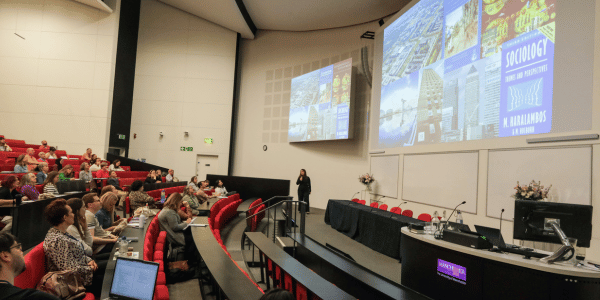
Just one of the dozens of sessions at the 2024 Geographical Association Conference (source: GA)

You’ve been teaching for a while. You’ve got the textbooks, the notes, the resources, and you have a good team around you at school. And of course you’ve got the internet. So why add to life’s complexities and expenses and go to conferences as well? And what should you do when you do attend?

I attended the GA Conference for a couple of years as a new teacher, but then fell out of the habit, only to return in recent years, with a renewed zeal about engaging in these hubs of geographical ideas and collegiality, and I present most years, on a variety of topics.

I hope that by sharing some thoughts about conferences I might inspire you to attend and to think about how you can overcome some barriers which might prevent you from doing so. In this brief guide, I cover the reasons for going, and I have put together some ideas for what you might want to consider before, during, and after attending them.

Why go?

Why should you go to a teaching or academic conference? As a teacher and a part-time postgraduate student, I can see the value of both types, and whilst some of the reasons for attending one type of conference will be different to those for attending the other, there is considerable overlap between the two, and this section attempts to cover both.

To refresh your thinking, curriculum, and pedagogy. Conferences allow you to keep up to date with what’s happening outside of your ‘bubble’, whether that is your school, your exam board, your circle of colleagues, friends and influencers, or just your geographical milieu.

To expose your ideas to others. This will especially be true if you present a talk or a workshop, but it also applies to question-and-answer sessions and informal discussions.

To network. I have often shied away from this term, as it seems very transactional, but as well as being a way to look for work and new projects, networking also serves to keep you informed and refreshed in your current and future roles and activities. You may also be able to pass on opportunities or advice to other attendees, whatever your or their role might be.

To keep your subject and/or discipline alive, fresh, and thriving. Ideas die in a vacuum, and so do subjects. However small, your attendance and involvement in conferences will help to maintain and enhance the viability and relevance of the subject in a challenging school and academic environment.

You will, of course, have other reasons for attending, and one of mine is to take a break from my usual routines and to regain the ‘travelling bug’. We like to preach about students learning ‘in the field’, and I believe that we should follow suit: getting out and about, and interacting with different people and places, on your way to, and at, conferences should help you to develop as a geographer.

What to do beforehand

Scope out sources of funding for your trip. These might be from your school or university, or you may be able to source sponsorship from a publisher if you have been involved in examining or writing. Attending the GA Conference has been called ‘the best value CPD’ in the subject, as you can drop in to several sessions for a similar price as a one-day course taken by a single organisation or led by a single speaker.

Book tickets, transport, and accommodation early, or at least scope out the options. This will help to keep costs down. Consider staying at free (family or friends) or very low-cost accommodation: you may not have stayed at hostels since your youth, but they offer convivial, compact places to stay. Some offer ‘pods’ which allow you to sleep in privacy.

Consider other ways to keep costs down. You don’t need to bring your own outsized plate to an all-you-can-eat buffet, but you can make full use of the inclusive conference food and drink opportunities, walk or use cheap public transport, and be willing to shorten your stay.

Try to be sustainable. In the hierarchy of environmental impacts, travel will usually be your biggest impact, so look into train, bus, ferry, and active travel where possible, and share private transport where you can. I travelled to the IGU Conference in Dublin by train, ferry and bus, and on each mode I was rewarded by chances to think, sleep, read, and write. I left the last session at noon, grabbed a conference lunch, then travelled by bus, foot, ferry, and three trains to my home in a Leeds suburb in just over nine hours. Food and other consumption and waste-related habits will also be a consideration. But you can be reassured that, as a geographer, you are likely to be playing a part in sharing environmentally friendly attitudes and behaviours in your working life anyway. Other ethical considerations will also no doubt enter your decision-making processes, and it’d be good to share these with the conference organisers in their post-conference surveys, or well in advance of the next one.

Don’t be afraid to apply to talk at conferences! You might want to start off by doing this as part of a duo or a small team or a short contribution to a ‘Teach Meet’. In recent years, both the Information and Communication Technology (ICT) and the Geography Education Research (GER) Special Interest Groups have run sessions where they have invited participants to speak for a few minutes on a practical IT idea or some potted research findings at the GA Conference, and a handful of Irish researchers delivered five-minute ‘lightening’ talks at the IGU Conference in Dublin.

Contact the conference organisers in advance with queries. You may have some justifiable anxieties around inclusion, and conference organisers should do their best to accommodate and welcome a diverse group of delegates. Groups such as the Decolonising Geography collective are also valuable and friendly sources of support and advice in this regard.

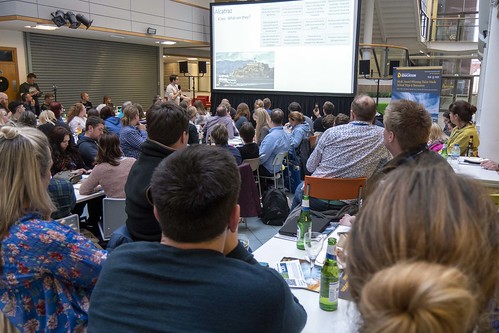
GA Teachmeet, 2018 (source: GA)
What to do during the conference

This is, of course, totally up to you, and it will depend on your reasons for attending. But you might want to consider these points:

Approach people – and appreciate that everyone else will also be facing similar challenges to you in terms of remembering names and faces. Don’t forget to wear your name tag and to look at other delegates’ tags too – they’ll be looking at yours!

Interact with presenters – this could be by asking a question, or by stopping afterwards to talk to them. I find these easier to do than approaching people ‘cold’ as mentioned in the previous bullet point. Most presenters will welcome your interest in their ideas.

– When choosing which sessions to attend, try to mix your usual areas of interest with others. For example, at the GA Conference, you might find classroom and curriculum-building sessions the most immediately useful, but subject knowledge updates will help to reinvigorate your passion for the subject, as well as come in useful the next time you teach the topic covered. They might also promote new ways of thinking – for example, at the IGU conference, amongst the sessions on Geographical Education, I attended one on African ‘development’ and one on political Geography. At the latter, I was reminded of the role that climate scepticism plays in several far right, disruptive, and some other populist movements, and I carried that thought over to the ensuing session on climate change education, where I considered how educators might succeed in fostering pro-environmental attitudes amongst young people that they may carry into their adulthood, when they may feel more empowered to vote and to more amenable to pro-environment policies when governments enact them.

Make notes during presentations. How you react during and after sessions is personal, but I find that making hand-written notes helps me to process and prioritise what is taking place in sessions. Other attendees may type up notes, and others will just attend thoughtfully. Be respectful though. Whilst a few delegates attending to emails and messages in a presentation is to be expected, it can be disheartening to speak to a room where such behaviour is commonplace. This behaviour can also be distracting to other attendees too. I have twice seen the same delegate watch cycling races on his full laptop screen – and on one of these occasions he was even chairing the session and sat on the front row!

Miss some sessions! You can’t do everything, so you will have to be resigned to missing some sessions which clash. You may even decide to take a break from attending any sessions – or slipping out midway if you are about the speak at a session yourself (although see the previous point – this should be done quietly and politely).

Attend some events that escape the confines of a lecture theatre or classroom! Some field trips at the GA Conference only last forty minutes; others may take over an hour – and some at the IGU conference took up half a day.

Engage with the social calendar. This could be an informal ‘lunch with…’, an evening meal, a guided stroll, a pub crawl, or a hybrid of these events. This way you will get to know people a bit better and even explore ways you might work with them in the future. Good friendships often begin or are strengthened by such events too.

Take some time to decompress. This could be going for a walk, run, or whatever you do to relax. If you think you’ll find it hard to do this, then why not combine it with your transport needs – I walked several miles to and from the conference, bus stops, and the ferry port in the recent IGU Conference, and over a decade ago I popped out of the GA Conference in central Manchester to do an urban orienteering event!

After the conference

Follow up on leads, write down your main take-aways, and you may also want to consider writing about your presentations, or your conference experiences, either for Teaching Geography or Primary Geography, or more informally via blogs (including, but not confined to, the GA blog).

If an organisation funded you, they may want a report or a presentation, and although this may seem to be a drag, you can tell yourself that such a task will help in your self-reflection, professional development, and intellectual stimulation.

To find out more, talk to colleagues and friends who have been to conferences before, contact the organisers, and feel free to ask members of the GA – including the author of this piece!

Go for it!

David is a member of the Geographical Association’s GERSIG (Geography Education Research Special Interest Group); this post was originally published in the Geographical Association’s Blog: https://ga-blog.org/2024/12/16/geography-conferences-why-and-how/

Categories
Geography Outdoor Learning

To fly or not to fly?  The Geography teacher’s dilemma

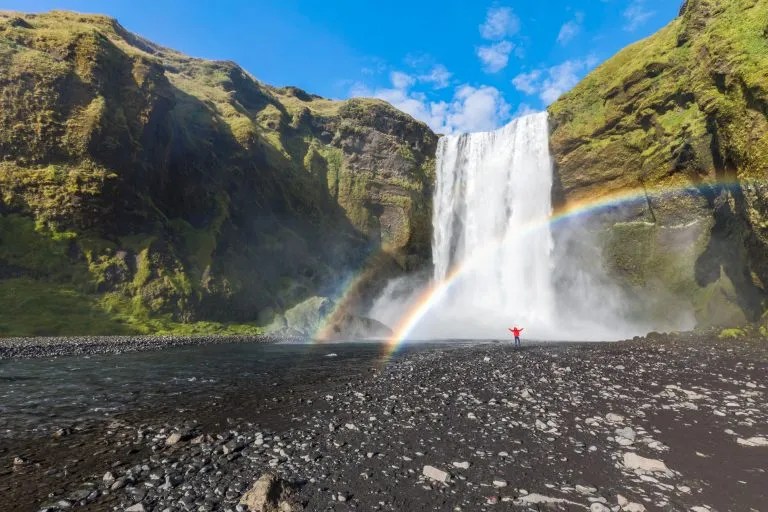
Double Rainbow in Iceland (Source: Discover the World Education)

When three environmentalists discuss the pros and cons of flying, as they did in a recent podcast episode, and at the end of it, they all agree to continue undertaking this high-carbon activity, what are geography teachers supposed to do?

Raise their eyebrows at the hypocrisy?  Shake their heads in despair?  Agree and move on?  Or listen and consider their position on the issue as educators and global citizens?

Benefits of flying

I recognise the huge benefits of flying – it has helped me to explore the world, meet new people, become more open-minded, and to become a geographer.  And I would like those benefits – as well as the ‘awe and wonder’ component of many foreign field trips – to be experienced by young people.  I also recognise the vast social and economic benefits of travel to many destination communities around the world.

But I have difficultly coming to terms with the very real impact of not just my own carbon footprint, but that of the dozens of children who I encourage to fly on school trips to locations such as Iceland.  Facilitating 26 student return plane journeys to Iceland, as I did last month, weighs heavily on my mind.  Many of you reading this post will no doubt have also experienced this dilemma.

Premises

Let’s take a step back and look at this issue as part of the bigger picture of flying.  My premises for this post are as follows:

  1. Geography teachers are very well-informed people about environmental issues
  2. Being well-informed of such issues, we recognise the existence of, and impacts of, anthropogenic climate change – and that such impacts are overwhelmingly negative for almost all people in almost all parts of the world
  3. We also recognise that climate change is a collective action problem – that is, a situation in which all individuals would be better off from co-operating, but in which there are few incentives for individuals to take individual action
  4. We recognise that as affluent members of an affluent country, we are likely to have a large carbon footprint
  5. We recognise that transport, particularly air transport, is likely to be one of the biggest contributors to our carbon footprint
  6. We recognise that, as teachers, we are role models to our students (and often to those in the wider community), so our decisions about how we act and what we say are likely to have a significant impact on the opinions and behaviours of others
  7. Field trips are an essential part of what we do as geography teachers.  We are very likely to organise them, lead them, take part in them, or facilitate them
  8. Whilst essential in their educational role, field trips have an impact on the environment – and generally, those involving trips abroad are more likely to involve flying

So what do we do when we consider opening our students’ eyes to the world by organising field trips which involve flying?  Cut out the flights altogether?  Always go local?

Let’s return to the podcast for a moment.

Outrage and Optimism

It’s called Outrage and Optimism, and it’s highly recommended listening for geography teachers who want to keep up to date with developments in climate change policy.  The three presenters have all been working in international environmental policy making and advocacy for decades: Christiana Figueres is the Costa Rican diplomat who led the negotiations which resulted in the 2015 Paris Agreement, and Paul Dickinson and Tom Rivett-Carnac continue to play active roles in this sphere.

They all fly frequently as part of their work, and they have all taken steps to try to minimise their flying: for several years, Paul only flew for work and not for family holidays, and they all make trips count by combining meetings and rejecting others in favour of remote working.  But they all recognise the importance of face-to-face meetings, as well as keeping in touch with family members, and they were all wary of moralising and preaching (as am I!).

They also recognise the range of opinions in the climate change community: in a survey they issued prior to the programme, 21% of the respondents said it was okay to fly, 21% said it wasn’t, and 58% said it was okay to fly in some circumstances.  They are under no illusion as to the role of flying in climate change, and the fact that its contribution to emissions is likely to rise owing to growing global prosperity and the decarbonisation of other sectors.  They flag up efforts to decarbonise the aviation sector: in keeping with the ‘Optimism’ part of the podcast’s title, they are open to the idea of technological solutions in the mid- to long-term.  But they are honest about the limited impact these will have in the next decade or so.

The Figueres Defence

The most powerful contribution to the discussion was by Christiana.  She issued a forceful defence of carbon offsetting:

“I have been abundantly public for many years that I am an offset proponent.  I think it is important, because I come from a developing country, and I have seen the benefit in developing countries of receiving funding for projects that otherwise would not be funded”

She pointed out that the offset market uses rigorous methodologies.  Nevertheless, she recognised that providers of offset schemes are unregulated and there is much uncertainty in the sector.  To compensate for this, she implored listeners: “if you’re going to offset, offset abundantly and generously” and “make sure that you have covered and over-covered your emissions, and that you are investing in high quality projects in developing countries who need that investment.”

How might Christiana’s contribution speak to the geography teacher’s dilemma?

Six suggestions for Geography teachers

Returning to the premises at the start of this post, we should be mindful of the carbon footprint of field trips and we should also consider how we might run them in a way which facilitates the discussion of these issues by students and teachers alike.  So here are six suggestions for how geography teachers might approach the dilemma of flying and field trips:

  1. Use flights on a field trip when other alternatives are not reasonably available
  2. Fly when the experience warrants it
  3. Organise field trips that involve flying less often than you might be tempted to – perhaps once every two or three years?  We now interleave our foreign field trips, which used to take place annually, with one to the excellent Field Studies Centre in Millport, on the Isle of Cumbrae in western Scotland.
  4. Carbon offset your flights, and consider ‘over-offsetting’ – see Christiana’s comments above
  5. Ask tour providers what they are doing about the impact of their flights.  When I called three school tour operators a few years ago about this issue, only one had formulated a policy about it: Discover the World Education.  So I stopped using our previous tour company and began working with DtWE.  More tour companies are developing their sustainability policies, but it is still worth asking questions of them
  6. Involve students, parents, and indeed your senior leadership team, in your deliberations, and take the issues out in the open.  For the first time this year, we included a slide on sustainability in the parent’s information presentation, and this began not with reusable cups and paper straws, but with the ‘elephant in the room’ – the flights – and why we were contributing to Discover the World’s ‘Greener Growth’ offset scheme.  We are proud that we have paid £20 per student into this scheme: a total of £520

You may well be further down the road in terms of sustainability of your geography field trips than me, or you may have just begun the journey.

You may have already dismissed the idea of offsetting, or you may have embraced it.

You may feel that the geography curriculum – and the acts of its teachers – should be clearly separated from issues of how we ‘act sustainability’.

But whatever your stance, I believe that if you return to the premises I set out at the start of this post, you will agree that the issue of flying is certainly worth paying attention to, and perhaps worth acting upon.  I welcome your thoughts.

Readers may be interested to read a post I wrote a few years ago called ‘In defence of carbon offsetting’.

Categories
Outdoor Learning Teaching and Learning

Let them play!

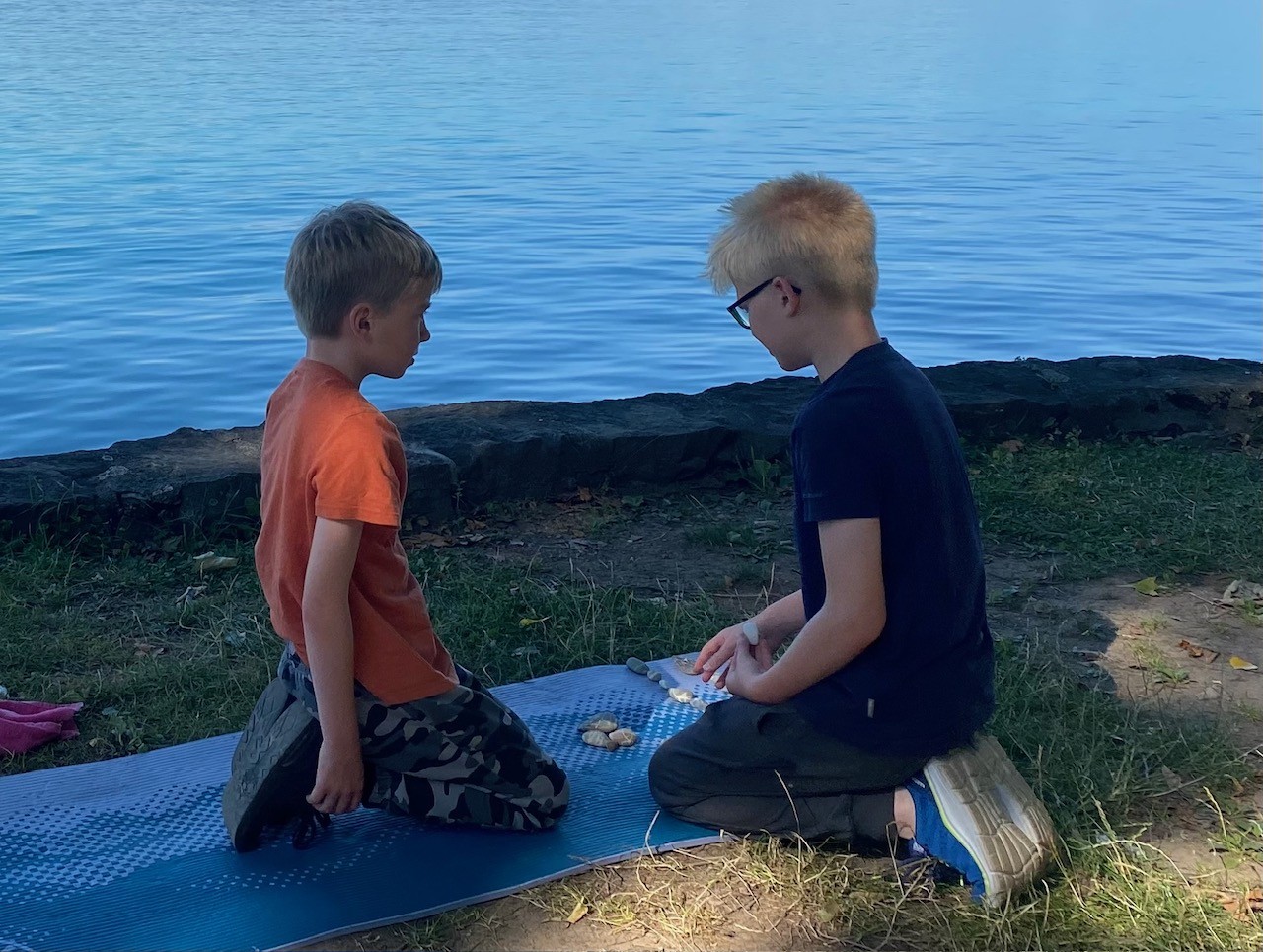
Playing with pebbles (source: author)

What do you remember about lunchtimes at school?

The meals were one thing, but what really stands out in my mind’s eye were the kickarounds.  At my primary school in Cardiff, we played on grassy fields which we shared with the ‘Welshies’ – the neighbouring primary school where lessons were taught in Welsh.  At secondary school, we played on tarmac, and we were only allowed to play with tiny footballs, but the games were jumpers-for-goalposts affairs, and all were welcome – even me with my awful skills.  The games were a welcome break from my studies.

When I do lunchtime break duties at school today, it’s great to see hundreds of pupils still having kickarounds, with a few younger ones playing tig.  There’ll also be games of tennis-ball cricket, and on the sidelines a few younger girls will be doing some kind of dance or singing a song that I’ve never heard of.

And my sons’ main talking points after a day of primary school often mention the games they played at break time, in after-school clubs, or in PE.  It’s also great to hear about how so much of their learning takes part through the medium of outdoor play – whether that’s chalk-drawn times tables on the tarmac or orienteering with quiz questions at every checkpoint.

Is play being squeezed out of schooling?

But overall, and with some admirable exceptions, play seems to be being squeezed out of schooling, in the name of behaviour management, squeezes on funding and staffing, health and safety concerns, and in some cases owing to the reduction of available green space and even asphalt playgrounds.

Research has highlighted the problems of declining lunchtimes and breaktimes at secondary schools – one of which is the restriction of children’s instinct to play.  An older friend of my son reports taking a packed lunch, not because the school meals are bad, but so that in the half an hour allocated to lunchtimes, he can snaffle down half a sandwich and then spend the remaining 25 minutes playing football.  A teacher at another school reports that their students barely have any time to step outside and burn off some energy between their rigid ‘family meal’-style lunch and their disciplined but time-consuming queuing system prior to afternoon lessons.

Decline of play outside of school

You may think that such arrangements are fine because children can play outside when they get home.  But, in a trend which Jonathan Haidt pointed out started in America, parents and other caregivers have been increasingly reluctant to let their children play outdoors, especially in unstructured, independent play.

Some of this is down to a trend towards directing children towards more organised extra-curricular activities for fear of them missing out on some skill or other.  Some of it is due to an exaggerated fear of external dangers such as violent crime.  And some of it is due to a well-intentioned but ultimately psychologically harmful desire to protect our children against getting injured.

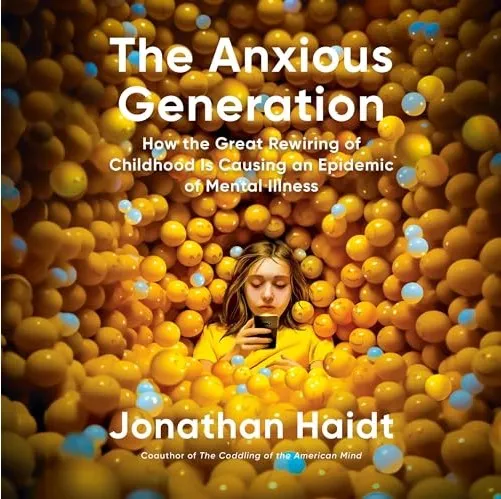
Jonathan Haidt’s book, The Anxious Generation (source)

In parallel with this trend towards overprotectiveness, Haidt, in his book, ‘The Anxious Generation’, demonstrates that increased use of smartphones and other screen-based activities amongst children since the early 2010s has resulted in fewer opportunities for children to play together, whether indoors or outdoors, and therefore fewer chances for them to learn how to socialise and to manage risks.

Parents and teachers have recognised the challenges – and indeed dangers – of excessive use of screens for years.  And schools are getting better at setting rules and advising parents on how to manage screen time.

Big tech companies

However, Haidt argues that most of blame for this squeezing of playtime lies with big tech companies.  They built their business models on hooking adults, and now they go to great lengths to hook children on smartphones to both maximise their revenue and cultivate future avid screen users.

Mobile phone usage – a timebomb for our young people? (Source: Charles Deluvio / Romolo Tavani)

Leniency with age limits, developing algorithms to autoplay videos and posts aimed at keeping the user online, developing child-friendly and addictive games, and encouraging the creation of multi-day friendship ‘streaks’ are just some of the methods used to keep young eyes on their phones and away from the lure of outdoor play.  Haidt recommends new laws and guidelines for tech companies to try to reverse the harms caused by excessive screen time, therefore freeing up our children to play more.

Dare we hope?

But schools have a role too – and not just in terms of phone bans.  And, with the dawn of a new government, dare we hope that policies and expectations will move towards a more play-friendly childhood?  Towards longer breaktimes?  Towards more outdoor learning and field trips?  And all the better if such play takes place in green spaces: recent studies show that wider exposure to such areas reduces behavioural problems, gives children a cognitive boost, and may even improve academic achievement.  This is before we enter the territory of allowing students of all ages more time to ‘play’ with ideas through enquiry-based learning. 

In the meantime, whatever the weather this summer, let’s do what we can to let our children play!

This article first appeared in the Yorkshire Post, 8 August, 2024

Categories
Geography Hopeful Education Optimism and progress Teaching and Learning

Grounds for hope in geography

After several years in gestation, and with the assistance of Elaine Anderson and Richard Bustin, I have distilled my ideas of how teachers may offer students ‘grounds for hope’ for their future and that of the world into an article for the Spring 2024 issue of Teaching Geography journal.

I have been inspired by many people, among them the psychologist Maria Ojala, who argues that fostering ‘constructive hope’ can enhance students’ engagement with issues of sustainable development, and David Hicks, who has written much on the topic of hopeful geography over the past couple of decades.

I take Hicks’ work further by drawing more heavily on global scale examples of ‘social progress’ to improve students’ aware of ‘big picture’ changes. I foreground Max Roser’s ‘three truths’ argument: the world is awful, the world is much better, and the world can be much better (see below):

The article also features resources which can help teachers to keep their understanding of global social trends up to date, including Gapminder, Our World in Data, and Pixels of Progress and in doing so it recognises the legacy of inspirational public health professor Hans Rosling.

A number of teaching resources which could be used by teachers wanting to engage with hopeful geography are featured in the article and as downloads; I have trialled all of them in schools (one example of a student’s future timeline is given as an illustration).

I give the threefold concept of hopeful geography, which can be taken further as the foundations of a hopeful education. I have written about this elsewhere in this blog, although my ideas evolve over time. I advocate for a curriculum which enables our students to do three things:

  1. Evaluate progress
  2. Believe in humanity
  3. Create a sustainable future

Any approach to education should be open to criticism, and hopeful geography is no exception. I acknowledge several concerns, most notably the accusation that it could lead to complacency, and I try to address each one.

As the article went to press, Hannah Ritchie’s book ‘Not the End of the World’ was published, and whilst it too is not exempt from critique, the guiding message of that book chimes with mine: it is helpful to open the possibility to our students that they might be “the first generation to build a sustainable planet” – and as geographers, there is no better opportunity than now to inform and inspire this generation.

Categories
Geography Teaching and Learning

Culture-led regeneration in Bradford

My article in the February 2024 edition of Geography Review outlines culture-led regeneration, assesses its impacts, and evaluates the need for regeneration in Bradford. It also outlines plans for Bradford’s year as the UK City of Culture in 2025. I’m proud that the editorial team made it the cover story (see above).

In this article, I differentiate between regeneration structures (the long term conditions necessary for areas to thrive, such as physical and social infrastructure, and policies such as taxation and immigration) and regeneration strategies (which tend to focus on one area for a time-limited period). The UK City of Culture scheme falls into the latter strategy. Culture-led regeneration is an increasingly popular strategy: it refers to attempts to use arts, music, literature, and often sport too, to attract people and investment to an area.

The success of Liverpool’s year as the European Capital of Culture in 2008 encouraged the UK government to launch its own City of Culture competition, the winners of which are shown below: 

YearCity
2013Derry-Londonderry
2017Kingston-upon-Hull
2021Coventry
2025Bradford
Winners of the UK City of Culture Competition

The UK provides cities (or regions) with funding to prepare a bid, and winners receive several million pounds to make their plans into a reality (Bradford will receive at least £3 million).

Plans for Bradford include making the most of the revitalised City Square, Bradford Live arena, the Alhambra and St George’s Hall, and many more venues across the borough. Themes will include ‘City of the World’, ‘Coming of Age’, ‘STEAM powered’ and ‘Welcome Home Sexy!’ – the latter refers to grafitto which visitors to the city could see when they arrived at Bradford Interchange train station (see above).

Critiques of the culture-led regeneration include discussions of the ethics and efficacy of spending money on cultural offerings when social needs may be more acute, and concerns that the laudable aims of culture-led regeneration may have been taken advantage of by big business. Oli Mould’s critique is featured in the article.

For the full article, you or your school should subscribe to Geography Review: https://www.hoddereducationmagazines.com/magazine/geography-review/37/3/geography-review-61/

I’d like to thank Shanaz Gulzar, the creative director of Bradford2025, for her help in putting together this article.

Categories
Geography Hopeful Education Optimism and progress

Turning the page towards a brighter future

Mural reading “Hope Reveals the World” on Newcomen Street, London SE1 (source)

12 brief reviews of books about hope

You will surely have experienced moments where a literary evangelist has brandished a book in your face and said “You must read this!”

Whilst not all will share my fascination with whether or not a hopeful worldview is justified, I remain ever the optimist, hence this online brandishing of not one, not two, but a whole armful of books.

The occasion for this post is that I have been working with my school librarian, Alison Park, to assemble a book display around the topic. The intended audience is children from the ages of about nine to eighteen (and their teachers!), which explains why the reviews are pithy, enthusiastic and broadly positive (although I have made some edits for this post). Deeper critiques relating to my teaching and research on the topic are deserved, but this is not the place for them!

1. ‘Factfulness: Ten Reasons We’re Wrong about the World – and Why Things are Better than you Think’ by Hans Rosling, Ola Rosling and Anna Rosling Rönnlund (Hodder and Stoughton, 2018) 

Read this to kick-start your hopeful journey!  Most people systematically underestimate the advances that humans have made in recent decades, and this book (and accompanying web resources) argues that such ignorance means that we do not believe that we can change the world.  It is also a personal account of Rosling’s career in medicine and public health, and his anecdotes illustrate the various advances that humankind has made in his lifetime, so if you are interested in a career in medicine, then this is well worth a read.  Whilst it does acknowledge the very real threat of climate change, it underplays it, and it also fails to communicate the persistence and scale of the extreme economic inequalities in the world.  Nevertheless, it is the one book of all the ones covered here which I recommend the most highly. 

2. ‘Hope in the Dark – Untold Histories, Wild Possibilities’ by Rebecca Solnit (Canongate, 2016) 

Do you think that taking action is futile?  Think again!  Read this to be get roused to fight for social justice.  Solnit attacks defeatism and draws upon several successes which you may or may not have heard of, from racial to gender rights and plenty of other battles. Rich in anecdotes but thin on statistics, Solnit gets the tone just right to give your levels of hope a boost!

3. ‘Good News: Why the World is Not as Bad as You Think’ by Rashmi Sirdeshpande (Wren and Rook, 2021) 

Written in an informal, jaunty style, this is great for anyone from Years 5 to 13 – and beyond!  Learn about why we should balance the bad news we see in the headlines with a huge range of good news stories from around the planet.  It features not only facts and figures but also individual stories to inspire you to approach the world with hope. I learned a lot about the wide range of people and organisations who making a difference across the world to create a brighter future for us all. 

4. ‘Enlightenment Now’ by Steven Pinker (Penguin, 2018) 

In an era of uncertainty and with many crises facing humanity and the world, Pinker asks us to look at the improvements to our lives that have taken place in recent decades, which have been poorly appreciated and therefore poorly valued.  He argues for the somewhat unfashionable concepts of ‘progress’, ‘reason’ and ‘enlightenment’, and he seeks to avoid the despair engendered by voices on the extreme right and left wings who argue that society is declining. Whilst his tone might grate, and his stance on inequality and environmental damage deserve a deeper critique, this is a very engaging and well-researched book.

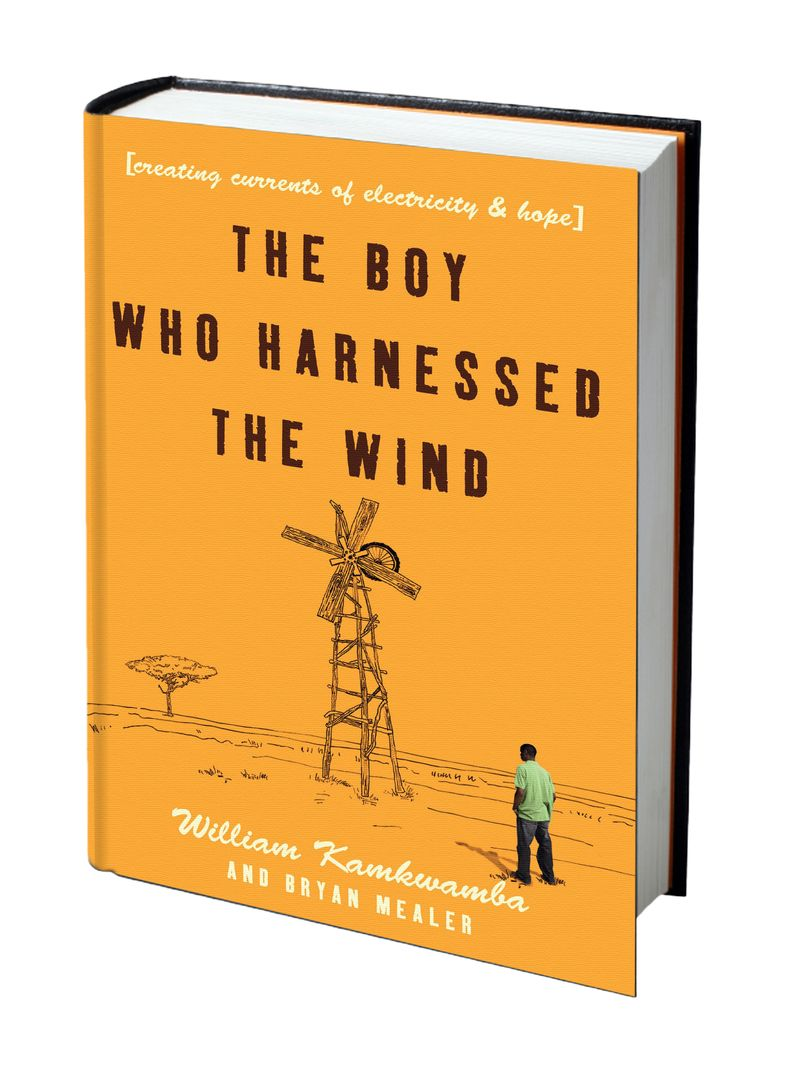
5. ‘The Boy Who Harnessed the Wind’ by William Kamkwamba and Bryan Mealer (Young Readers’ version from Puffin, 2019) 

Sometimes, facts and figures can wash over us – we struggle to get a hold of big trends which are improving the lives of so many people around the world, such as the spread of vaccinations, reductions in infant deaths, and the vast reach of electricity throughout the world.  At these times, human stories really hit home, and here is one of them.  Also a hit movie, this is the true story of a Malawian boy who not only used his ingenuity to supply wind power to his household, but also to his village. A ‘younger reader’ version of this book is also available.

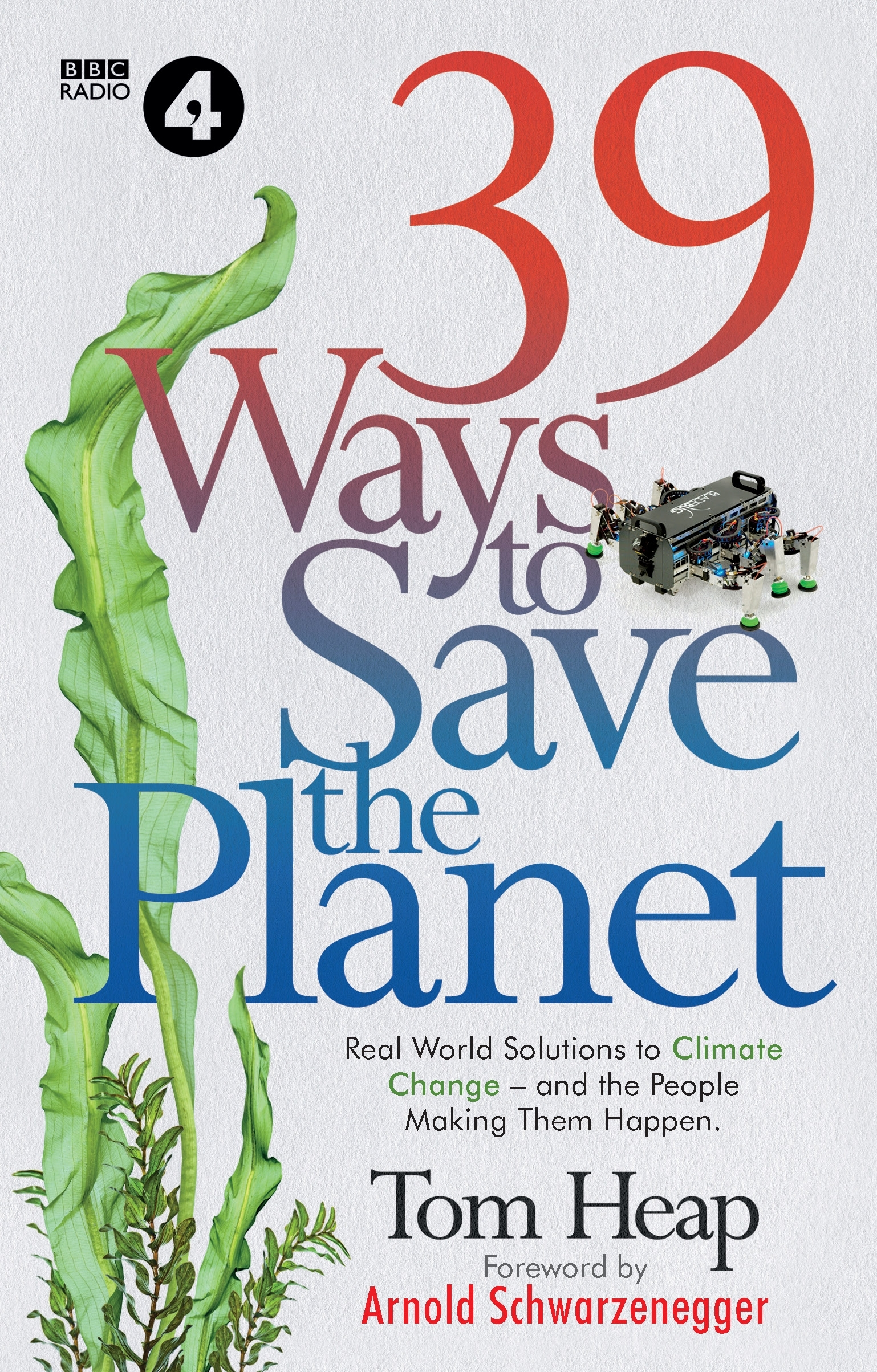
6. ’39 Ways to Save the Planet’ by Tom Heap (Penguin, 2021) 

There is no ‘silver bullet’ which will fix the world’s ills, but if we weave together many programmes, initiatives and inventions, we can secure a sustainable and prosperous future for people and the planet.  Written around the time of the peak of the Covid-19 pandemic, this book summarises 39 ways in which we can solve the climate, ecological, and other crises facing the world.  The book follows a BBC Radio 4 series of 15-minute podcasts, each one covering one of the ’39 ways’, which you can get from your podcast provider. The Royal Geographical Society have also made an accompanying set of educational resources for schools. It steers clear of total technological solutionism by including some more political and social approaches to a brighter – and greener – tomorrow. Read it – or listen to it – and be awed. 

7. ‘There is No Planet B’ by Mike Berners-Lee (Cambridge University Press, 2021) 

This is written in a very clear and understandable fashion, and it is really useful for those who recognise the necessity of active hope over passive hope and complacent optimism.  Unlike many in this selection of books, most space is taken up by outlining the main environmental challenges that the world faces, but it then goes on to give some clear actions which we could all – individuals, companies and governments – could take.  I dare you to read it and not be emboldened to take action.

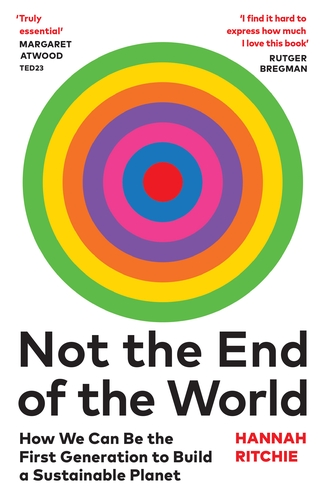
8. ‘Not the End of the World’ by Hannah Ritchie (Penguin, 2024) 

I am writing this in advance of its publication, so I hope not to be disappointed. I base my judgement on Ritchie’s output to date, whether it is in Our World in Data, her email newsletter, or her TED talk. The book is set to be one of the most hopeful publications of 2024.  Ritchie is a data scientist at Oxford University who writes widely on issues of social and environmental matters.  She is still in her twenties, and she identifies with many other young people in that she has experienced anxiety about the future of the world.  She now counters this with a more hopeful worldview, built around a richly evidenced argument that we have already been making strides towards a more sustainable future (e.g. with regard to shrinking carbon footprints, increasing life expectancies and rocketing numbers of EVs).  She says that hers is not the last generation on earth, but rather it could – and must – be the first generation to live truly sustainably. 

9. ‘What We Owe the Future’ by William MacAskill (OneWorld, 2022) 

This is the toughest read of this selection of books – the audiobook version (or this book review in The Conversation) might be a great ‘first time through’, before you pick up a printed copy – but it is also the most profound.  When we think about the future we often think about the next generation, or perhaps two.  But MacAskill says this is like a child preoccupied by the next sugar rush, when they have many years ahead of them.  If, as seems likely, humanity survives, and even thrives, in the coming crucial decades in terms of overcoming the climate and ecological crises, then we could have thousands of generations ahead of us.  MacAskill argues that we need to ensure that humanity needs to agree upon the best possible rules of morality and behaviour before AI ‘locks in’ such rules, possibly forever. 

10. ‘Educating for Hope in Troubled Times’ by David Hicks (IoE Press, 2014) 

You form so much of your worldview at school.  This book looks at how you and your teachers can introduce a ‘futures dimension’ into your learning.  The future is not set in stone – your generation will shape it – so we should always learn with the future in mind. Useful for those thinking of entering teaching, careers in sustainability, and those who are not afraid to talk to their teachers about the future! If I was to level one criticism at it (aside from it now being almost ten years out of date, and it shows, with references to ‘peak oil’ and the like), it is that, contrary to its title, it sometimes defaults to a pessimistic view of the future, and that it doesn’t pay enough attention to human ingenuity, scientific research, and the pace of change.

11. ‘Humankind: A Hopeful History’ by Rutger Bregman (Bloomsbury, 2020)

Rutger Bregman is a Dutch writer and historian, who is perhaps best known for pointing out the ‘Elephant in the Room’ at the World Economic Forum in 2019: that if the global 0.1% stopped avoiding tax then we may be able to take a bite out of global wealth inequality. He also supports radical social proposals like a Universal Basic Income. In Humankind, he revisits some of the commonly-held assumptions about how we behave, showing that in times of crisis, rather than reverting to a ‘Lord of the Flies’ state of selfishness and bullying, almost all of us look out for our fellow humans. Moreover, thinking the worst of others affects our politics and economy too: if we assume that most people are selfish and individualistic, then that can make us cynical and reduces our desire to work collectively for the common good. As such, this book is about realistic hope rather than about idealistic hope.

12. ‘The Glass Half-Empty – Debunking the Myth of Progress in the Twenty-First Century’ by Rodrigo Aguilera (Repeater, 2020) 

Aguilera adopts a critical stance towards notions of ‘progress’.  He looks at the messages of Hans Rosling, Steven Pinker, and the like, and decides that they gloss over persistent inequalities, climate change, and the future of work.  Worse still, he thinks that they foster complacency, so we are satisfied with the status quo (the way we live today) and feel less likely to take action to secure a sustainable future.  What do you reckon?  Read it and decide!

Over to you

I welcome feedback on these books (and even the reviews). Moreover, I would like to find out more about the books which have made you think about the ‘scope for hope’ (from either a boosterish or a more critical standpoint).

If you are interested in how I can work with your school or other organisation to foster ‘Grounds for Hope’ (in assemblies, workshops, or CPD sessions), then please get in contact via X/Twitter: @DavidAlcock1 or @HopefulEd.

Categories
Assemblies Geography Hopeful Education Optimism and progress Teaching and Learning

Grounds for Hope workshops

“The session was outstanding and incredibly thought-provoking.  … I would definitely invite David back to deliver more sessions; he has a calm and inspiring delivery that makes you ‘hang on his every word’.”  Mike Smith, Curriculum Director of Geography, Meridian Trust

Looking for inspiring CPD for your teachers? Or hopeful and hands-on sessions for your students?

Read on to find more about how I have worked with schools and trusts and how I might work with you.

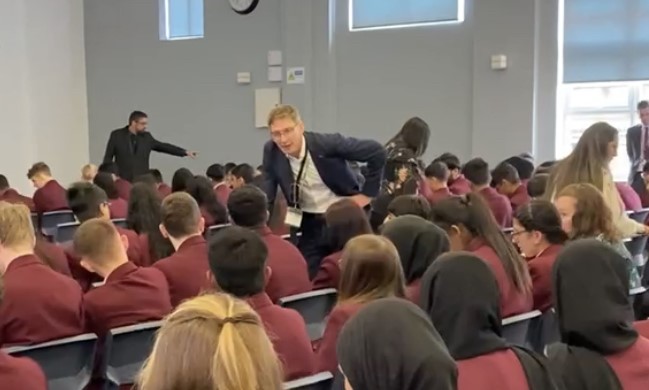
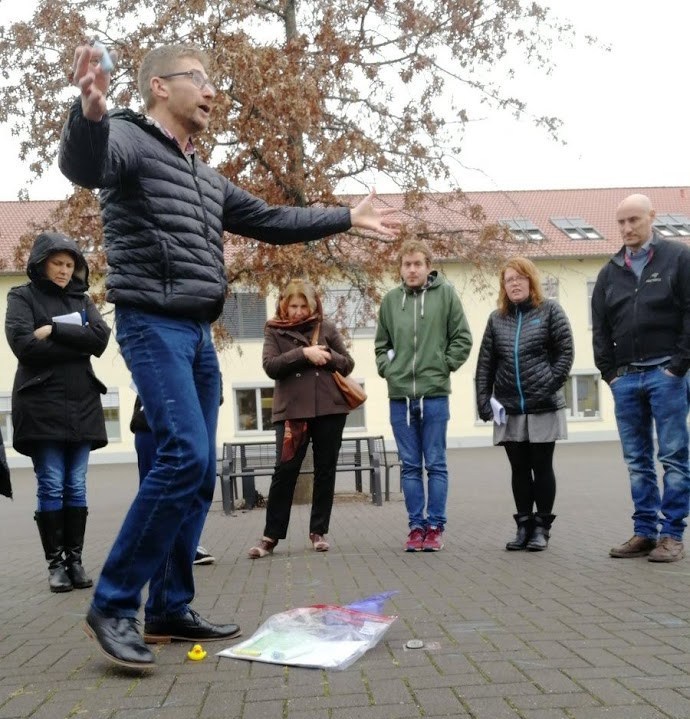
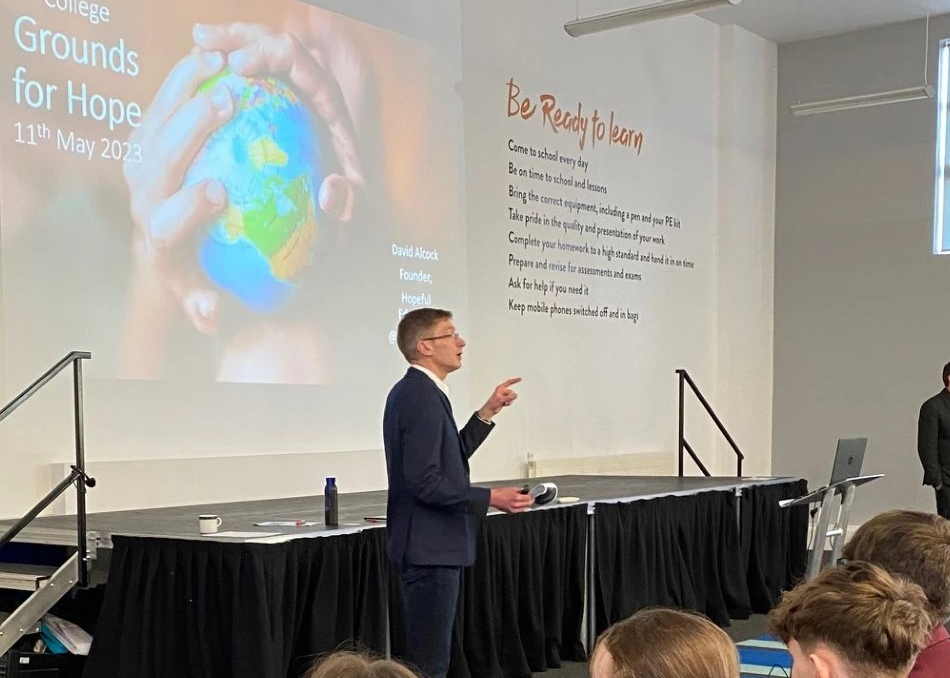
I run sessions for students and teachers, highlighting how people have come together to overcome global challenges, and how your students might be emboldened to play their part in doing so in the future.

Testimonials

“A uniquely informative and thought-provoking initiative … A must for any school wanting to empower young people.” Houry Stewart, Assistant Principal, Fulneck School

“Unique and engaging… well-paced and interactive” Ross McOwen, Head of Year 13, Bradford Grammar School

“Hopeful Education provided us with some really eye-opening and thought-provoking Grounds for Hope sessions.  The students were fully engaged and ready to take action after these very hopeful sessions.”  Lisa Lott, English Teacher and Sustainability Co-ordinator, Hathershaw College, Oldham

“An excellent CPD session… a blend of theory and practical strategies on the art of being more hopeful… The feedback from all staff was highly positive.”  Richard Hart, Assistant Principal (Research & Development), Dixons Academies Trust

“Pupils enjoyed a thought-provoking morning reflecting on how the world has in fact improved, even when the 24-7 news cycle seems to suggest things are getting much worse.  Pupils came away from the morning feeling much more optimistic about the future – thank you!” Sam Haslam, Deputy Head (Academic and Staff Welfare), Portsmouth Grammar School

What is ‘hopeful education’?

Hopeful education first involves listening to students’ hopes and fears for the future of the world.

It then encourages them to evaluate where humanity has come from, to celebrate its achievements (e.g. protection of rights, increases in nutrition and life expectancy, reductions in infant mortality rates, deaths from war and hazards), and to believe in humanity’s potential to solve current challenges.

Finally, it encourages students to play their part in creating a sustainable future for people and the planet.

What do these sessions typically involve?

‘Grounds for Hope’ talks and sessions are tailored to each audience.  They can last from assemblies to a full day session, and they can be delivered to students from across the secondary school age range.  Prior to sessions, I issue a simple Microsoft Forms survey to participants where I gauge their hopes, fears, and awareness of global trends.

In a typical half-day session, I voice and recognise the students’ concerns from the survey, then attempt to contextualise them in the ‘big picture’ of global patterns and long-term trends.  I also look at how psychology, the media, and education all play a role in influencing young people’s worldviews.  I highlight past successes in overcoming challenges, such as smallpox and polio, malnutrition, extreme poverty, acid rain, and several types of discrimination.

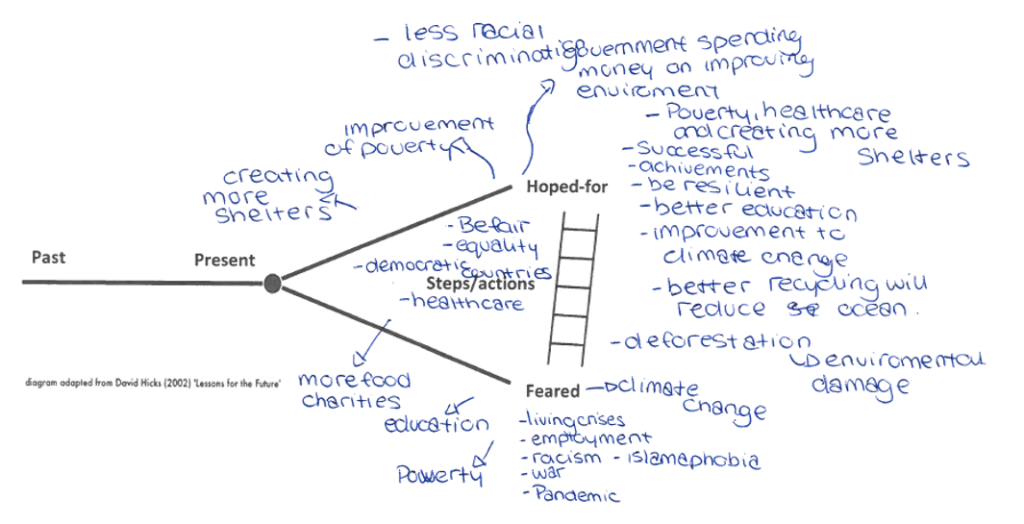
Example of student future timeline, Hathershaw College, April 2023 (Lisa Lott)

I accentuate the role played by a range of stakeholders in the way these have been overcome (such as the UN, scientists, and pressure groups), and, with the use of hands-on techniques such as group-created future timelines (see above for an example) and ‘future headline’ writing, students are encouraged to play their part in envisioning and creating a better future for people and the planet.  I sometimes work with other teachers to deliver these sessions.

What about my CPD sessions to teachers?

I also deliver CPD sessions to teachers (whole-school and geography-only), to investigate the issues of worldview formation and to discuss the role of education in fostering ‘hopefulness’.

These have been between 30 minutes and two hours, and have been in-person and online. Most value is gained by in-person sessions of at least an hour’s duration.

What is my conception of hope?

In these endeavours, I emphasise that hope is active, and that it can be the tough option compared to despair on one hand and optimism on the other.  I also take care to acknowledge the seriousness of the local, regional, and global challenges facing our young people and the world they will inherit.  Nevertheless, following Rebecca Solnit’s lead, I seek to highlight ‘Hope in the Dark’ and believes that there are several positive global trends which should indeed give our young people ‘grounds for hope’.

What is my background?

I teach Geography and in my twenty years in the profession, I have held roles as Head of Department, Head of Faculty, and Head of Outdoor Education, as well as Sixth Form and Teaching & Learning positions.

Geographical Association Annual Conference and Exhibition, Sheffield Hallam University, April 2023 (Shaun Flannery)

I have written on ‘hopeful education’ and ‘hopeful geography’ for the TES, Impact, Geography Review, Teaching Geography, and on these and other themes in the Yorkshire Post and on alcock.blog.  I run ‘Grounds for Hope’ days at secondary schools, and I present and train teachers on these themes via CPD sessions and materials commissioned by the Geographical Association.

I am undertaking PhD research at the IoE on the themes of progress and the future in geography education, I assist in the delivery of the PGCE Geography course at Huddersfield University, and I engage with academic developments in the field of curriculum, pedagogy, and futures education.

Do you want to find out more?

Please contact me: alcock_david@hotmail.com

Follow me on X/Twitter: @DavidAlcock1 / @HopefulEd

Please find below the full text of testimonials received for both Grounds for Hope sessions and CPD sessions for teachers.

Grounds for Hope sessions

“A uniquely informative and thought-provoking initiative that helps young people recognise the hidden web of connection we have with nature’s systems and encourages them to think about the impact their choices can have on the future of humanity. A must for any school wanting to empower young people.”

Houry Stewart, Assistant Principal, Fulneck School, Leeds, October 2021

“For the past three years, David has led unique and engaging Hopeful Education enrichment and Personal Development days for our Year 10 and Sixth Form students. Always keen to ensure that he responds to the age-appropriate needs of our students at each key stage of their education, David has tailor-made Grounds for Hope sessions ranging from whole-school assemblies or year group focused sessions to smaller workshop carousels in both indoor and outdoor settings. David’s well-paced and interactive provision has addressed topics such as climate change and attentively responded to students’ hopes and fears about the future. I look forward to welcoming David to work with our students again soon.”

Ross McOwen – Head of Year 13 – Bradford Grammar School, June 2021

“Hopeful Education provided us with some really eye-opening and thought-provoking Grounds for Hope sessions.  The students were fully engaged and ready to take action after these very hopeful sessions.”

Lisa Lott, English Teacher and Sustainability Co-ordinator, Hathershaw College, Oldham, May 2023

CPD sessions for Geography and other teachers

“David provided an excellent CPD session on Hopeful Geography and Active Hopefulness at our Dixons Conference in February 2022 to 30 geography participants from across all Dixons Academies in Yorkshire and the Northwest. The session was a blend of theory and practical strategies on the art of being more hopeful when teaching geography. The feedback from all staff was highly positive. The session has enabled us to review and refine our curriculum offer through small tweaks, but with impactful results on the narrative that we are communicating within geography.”

Richard Hart, Assistant Principal (Research & Development), Dixons Academies Trust, W Yorks, Feb 2022

“David delivered his session: “Grounds for Hope in Geography” to all of the Geography teachers in our multi-academy trust.  The session was outstanding and incredibly thought-provoking.  David provided excellent resources and practical examples of how the theory around being more ‘hopeful’ in a subject that often has to discuss ‘doom and gloom’, could be implemented with students, either as whole-school activities, or in a classroom setting.  I was impressed with the amount of knowledge David was able to impart, whether than was knowing a variety of examples of ‘individual stories’, to the wider body of literature that has been written about this subject.  It was also impressive that David was able to communicate the critiques of his research, articulating that he really has thought of alternative viewpoints.  I would definitely invite David back to deliver more sessions; he has a calm and inspiring delivery that makes you ‘hang on his every word’.  Thank you David.”

Mike Smith, Curriculum Director of Geography, Meridian Trust, Nov 2023

Categories
Uncategorized

Why we should listen to young people’s views about the future

‘Dystopia’ by Deepak Nanda – source

“The world will be violent … the world will be in a worse state than it is now … Everyone will only care about themselves … The governments are going to be corrupt … There will be no greenery left … Everyone will be sad.  There will be no love.” (Belinda)

“There will be more street fighting… bigger gangs, more street deaths.  Life will be three times more dangerous than it is now … Hoping it won’t happen, but it will.” (Ann)

“The city is full of skyscraper buildings and police officers with helmets on and riot gear … The streets are packed with people … It has become like the Bronx, survival of the fittest.” (Anthony)

If you had asked me at the age of sixteen, I may well have given similar views to these three respondents.  Although rather extreme, their responses were representative of around eighty per cent of nearly 650 Australian upper secondary school students, from a range of socio-economic backgrounds, surveyed by Francis Hutchinson.  Asking students what they think the world will be like in the future is a common activity for those of us who are involved in education for sustainable development, and these apocalyptic scenarios are not uncommon.

The twist is that these quotations are from 1992, when not only were the respondents sixteen years old, but so was I.  I unearthed them during research into visions of the future held by young people.  And I am conflicted about what these now historic testimonies tell us.

Biased towards the worst case scenario?

Do they tell us that most teenagers will always be biased towards worst case scenarios?  Perhaps.  After all, many of the worries of those teenagers have not come to pass to the extent that they feared.

More violent?  But deaths from conflict and terrorism have stayed steady since the early 1990s at around 1 per 100,000 deaths.  More corrupt governments?  But the number of democracies around the world – granted, they are not always a hallmark of anti-corruption – has held steady at around 40%.  Survival of the fittest? But global life expectancy has risen from 64 in 1992 to 71 today.  No greenery left?  The history of deforestation is a tragic one, but temperate regions have had a net gain in forest since 1990, and whilst tropical deforestation is still occurring at a deplorable rate, this rate is slowing, and 31% of the world’s surface is forested, compared to 32% in 1992.

More at stake for teenagers

And yet the more sensitive part of my character empathises with those young people, and, by extension, with the young people of today.  They are willing to question the world more deeply than many adults, particularly those of us who are fortunate enough to be well insulated from economic and environmental challenges.  There is a greater deal at stake for teenagers, because they have many more decades ahead of them to live, and perhaps even to thrive, in this world.  And some might say that if we don’t worry about the future, then we won’t act to ensure that we thrive in it.

How we react to this piece of historic research is to a large extent academic.  But current research on the concerns of young people deserves more of our attention.  Surveys show that eco-anxiety is on the rise: a report published in 2021 by Caroline Hickman and colleagues reported that over 50% of young people surveyed felt sad, anxious, angry, powerless, helpless and guilty about the future.

Reassure and listen

Again, part of me wants to reassure them, to point to hopeful trends – to development indicators which show that poverty and hunger have decreased, that discrimination of all kinds has declined, and that we are beginning to turn a corner in terms of our attitudes towards the environment.  This is the same part of me wants to say that every generation has its worries, and that ‘Generation Z’ is no different.

But then a more empathetic, caring, part of me wants to listen more carefully to their concerns, to fully admit to the harms that mine and other recent generations have wrought on the world, and to join them in a movement which really does challenge the status quo.

Perhaps Rebecca Solnit strikes the right tone on this front – she writes that “We have a seldom-told, seldom-remembered history of victories and transformations that can give us confidence that yes, we can change the world because we have, many times before.”

Young people will always be uncertain about the future.  But this is all the more reason why adults should be open to having open and honest conversations about it.  After all, our children will be spending longer on this planet than we will.

This was first published in the Yorkshire Post, 17 August 2023