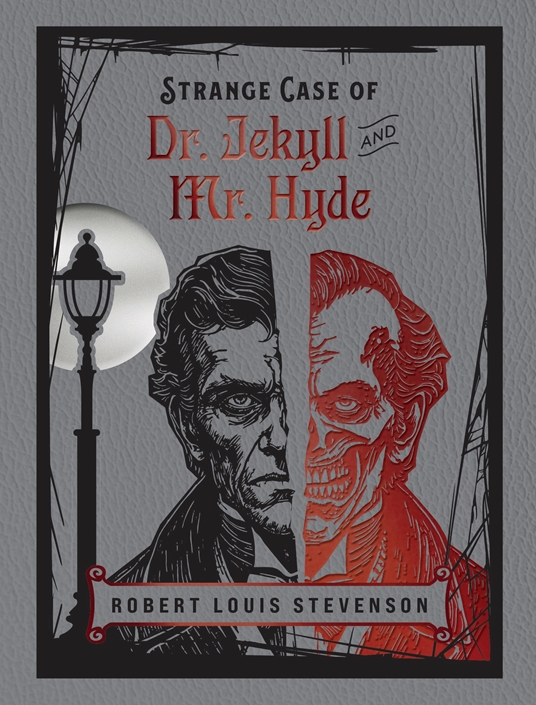
The Strange Case of Dr Jekyll and Mr Hyde book cover (source)
What should be the headline of the last 125 years?
When I ask this question of my students, I receive a variety of responses, ranging from ‘wars’ and ‘climate change’ to ‘the internet’ and ‘globalisation’.
I never hear ‘doubling of global life expectancy’, ‘collapsing infant mortality rates’ or ‘far fewer deaths from famine and disasters’.
It’s not that the previous answers are wrong, it’s just that without an awareness of some of humanity’s achievements, it is difficult to have a wide-ranging discussion about the ‘big picture’ of global change.
I must sound like a broken record in my call for there to be more ‘scope for hope’ in the geography curriculum. You can read more in my blog about my contention that students often leave their studies unaware of developments such as those mentioned above. The current programme of study at key stage 3 is not only notoriously muted on climate change, but its only nod to the profoundly life-changing (albeit unequal) advances in human flourishing is to require the understanding of “the key processes in… human geography relating to… international development”.
Hope beyond Geography
But Geography does not exist alone – it is, of course, part of an educational ecosystem in which students absorb and negotiate messages about the world from their other subjects, and from whole-school and extra-curricular activities.
Recent discourse in the press has prompted me to reflect on what role other subjects might play in the development of the worldview of our students. This is crucial for educators to consider, as our students need to be confident in playing their part in creating a sustainable and flourishing society and environment for their and subsequent generations.
English – cynicism over hope?
Author Caitlin Moran suggested in The Times in July that the “dry and depressing” GCSE reading list is part of the reason why teen reading rates are plummeting: “I’m a 51-year old author of nine books and even I wouldn’t want to spend a long, hot summer going line by line through Dr Jekyll and Mr Hyde”.
The poet Hollie McNish equally did not hold back on her stance in The Guardian: “After spending many evenings this spring testing my daughter on her GCSE English Literature quotes, I felt ready to vomit. Three set texts: Lord of the Flies, Macbeth and The Strange Case of Dr Jekyll and Mr Hyde. Shared themes of blood, death, murder, violence, the evil of boys and men. Then, if you’re tired of revising prose, a little war poetry for a breather. Lovely. More death.”
Moran went on to ask curriculum developers to pick “something loving, anything funny; just one book teenagers could smile at, laugh with even”. In the letters page a week later, Rachel Stott agreed, asking “Is this corpse-rich literary diet really the healthiest we can offer our notoriously anxious and doom-laden youth?”. The premise behind The Lord of the Flies – that left to their own devices, boys will descend into chaos – has even been thrown into question by the real life story of boys who were shipwrecked on a desert island in 1965, which Rutger Bregman uses as an illustration of the fundamental kindness of most of humanity. Is our choice of set texts teaching our students to become not only critical about the world, but cynical?
History – narrow scope for hope?
And what about the History curriculum? Whilst the current programme of study requires students at key stage 3 to know and understand the history of the British Isles “as a coherent, chronological narrative”, it does not require any kind of “coherent, chronological narrative” of broader world history, merely requiring students to understand about the “achievements and follies of mankind”.
Examples of social progress are optional at GCSE – one laudable example being Edexcel’s GCSE History’s unit Medicine in Britain, c.1250 to the present day – and as far as I can find, there appears to be no chance for GCSE students to evaluate global progress (or otherwise) in medicine or any other aspect of human flourishing.
PSHE – skills for life, or risk fatigue?
It could be argued that developing a worldview which at least gives the scope for hope is beyond remit of these subjects. Cross-curricular ‘big picture’ themes such as human flourishing and the nurturing of critical and rounded worldviews may need to be taken on by schools outside of traditional disciplinary silos. One alternative home for such themes may be Personal, Social, Health and Economic (PSHE) Education, which, as part of its aims, seeks to teach “knowledge and skills that will equip them for life”, including managing “the increasing influence of peers and the media”.
I have indeed taken up the opportunity in my teaching of PSHE to consider how the media and other influences can affect our world views and can cultivate a pessimistic stance towards the wider world. I also believe that there is a danger of ‘risk fatigue’ in PSHE discourse: faced by a barrage of threats in the realms of sex, drugs and crime, young people may either shut down and disengage, or they will not have the scope to put the risks in the context of wider societal trends, many of which are positive.
And so, as the curriculum review process moves on, whatever role we occupy, we should all keep in mind the importance of offering grounds for hope for the future to our students.
I welcome responses to my somewhat provocative arguments from those with other experiences and standpoints.
 alcockblog