Categories
Geography Teaching and Learning

Teaching conferences – why and how?

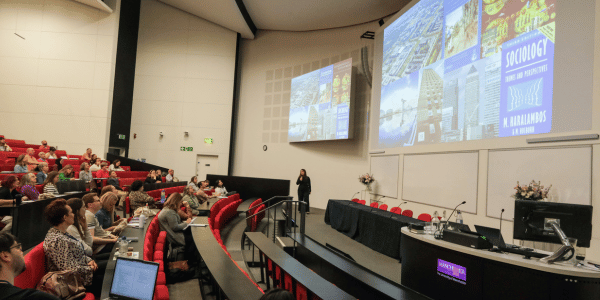
Just one of the dozens of sessions at the 2024 Geographical Association Conference (source: GA)

You’ve been teaching for a while. You’ve got the textbooks, the notes, the resources, and you have a good team around you at school. And of course you’ve got the internet. So why add to life’s complexities and expenses and go to conferences as well? And what should you do when you do attend?

I attended the GA Conference for a couple of years as a new teacher, but then fell out of the habit, only to return in recent years, with a renewed zeal about engaging in these hubs of geographical ideas and collegiality, and I present most years, on a variety of topics.

I hope that by sharing some thoughts about conferences I might inspire you to attend and to think about how you can overcome some barriers which might prevent you from doing so. In this brief guide, I cover the reasons for going, and I have put together some ideas for what you might want to consider before, during, and after attending them.

Why go?

Why should you go to a teaching or academic conference? As a teacher and a part-time postgraduate student, I can see the value of both types, and whilst some of the reasons for attending one type of conference will be different to those for attending the other, there is considerable overlap between the two, and this section attempts to cover both.

To refresh your thinking, curriculum, and pedagogy. Conferences allow you to keep up to date with what’s happening outside of your ‘bubble’, whether that is your school, your exam board, your circle of colleagues, friends and influencers, or just your geographical milieu.

To expose your ideas to others. This will especially be true if you present a talk or a workshop, but it also applies to question-and-answer sessions and informal discussions.

To network. I have often shied away from this term, as it seems very transactional, but as well as being a way to look for work and new projects, networking also serves to keep you informed and refreshed in your current and future roles and activities. You may also be able to pass on opportunities or advice to other attendees, whatever your or their role might be.

To keep your subject and/or discipline alive, fresh, and thriving. Ideas die in a vacuum, and so do subjects. However small, your attendance and involvement in conferences will help to maintain and enhance the viability and relevance of the subject in a challenging school and academic environment.

You will, of course, have other reasons for attending, and one of mine is to take a break from my usual routines and to regain the ‘travelling bug’. We like to preach about students learning ‘in the field’, and I believe that we should follow suit: getting out and about, and interacting with different people and places, on your way to, and at, conferences should help you to develop as a geographer.

What to do beforehand

Scope out sources of funding for your trip. These might be from your school or university, or you may be able to source sponsorship from a publisher if you have been involved in examining or writing. Attending the GA Conference has been called ‘the best value CPD’ in the subject, as you can drop in to several sessions for a similar price as a one-day course taken by a single organisation or led by a single speaker.

Book tickets, transport, and accommodation early, or at least scope out the options. This will help to keep costs down. Consider staying at free (family or friends) or very low-cost accommodation: you may not have stayed at hostels since your youth, but they offer convivial, compact places to stay. Some offer ‘pods’ which allow you to sleep in privacy.

Consider other ways to keep costs down. You don’t need to bring your own outsized plate to an all-you-can-eat buffet, but you can make full use of the inclusive conference food and drink opportunities, walk or use cheap public transport, and be willing to shorten your stay.

Try to be sustainable. In the hierarchy of environmental impacts, travel will usually be your biggest impact, so look into train, bus, ferry, and active travel where possible, and share private transport where you can. I travelled to the IGU Conference in Dublin by train, ferry and bus, and on each mode I was rewarded by chances to think, sleep, read, and write. I left the last session at noon, grabbed a conference lunch, then travelled by bus, foot, ferry, and three trains to my home in a Leeds suburb in just over nine hours. Food and other consumption and waste-related habits will also be a consideration. But you can be reassured that, as a geographer, you are likely to be playing a part in sharing environmentally friendly attitudes and behaviours in your working life anyway. Other ethical considerations will also no doubt enter your decision-making processes, and it’d be good to share these with the conference organisers in their post-conference surveys, or well in advance of the next one.

Don’t be afraid to apply to talk at conferences! You might want to start off by doing this as part of a duo or a small team or a short contribution to a ‘Teach Meet’. In recent years, both the Information and Communication Technology (ICT) and the Geography Education Research (GER) Special Interest Groups have run sessions where they have invited participants to speak for a few minutes on a practical IT idea or some potted research findings at the GA Conference, and a handful of Irish researchers delivered five-minute ‘lightening’ talks at the IGU Conference in Dublin.

Contact the conference organisers in advance with queries. You may have some justifiable anxieties around inclusion, and conference organisers should do their best to accommodate and welcome a diverse group of delegates. Groups such as the Decolonising Geography collective are also valuable and friendly sources of support and advice in this regard.
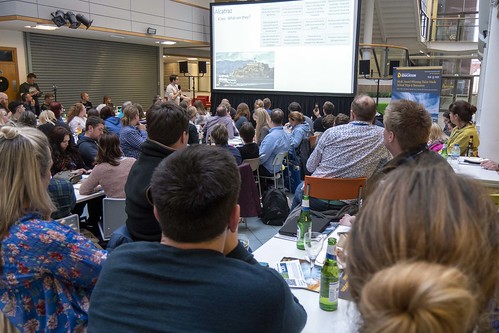
GA Teachmeet, 2018 (source: GA)
What to do during the conference

This is, of course, totally up to you, and it will depend on your reasons for attending. But you might want to consider these points:

Approach people – and appreciate that everyone else will also be facing similar challenges to you in terms of remembering names and faces. Don’t forget to wear your name tag and to look at other delegates’ tags too – they’ll be looking at yours!

Interact with presenters – this could be by asking a question, or by stopping afterwards to talk to them. I find these easier to do than approaching people ‘cold’ as mentioned in the previous bullet point. Most presenters will welcome your interest in their ideas.

– When choosing which sessions to attend, try to mix your usual areas of interest with others. For example, at the GA Conference, you might find classroom and curriculum-building sessions the most immediately useful, but subject knowledge updates will help to reinvigorate your passion for the subject, as well as come in useful the next time you teach the topic covered. They might also promote new ways of thinking – for example, at the IGU conference, amongst the sessions on Geographical Education, I attended one on African ‘development’ and one on political Geography. At the latter, I was reminded of the role that climate scepticism plays in several far right, disruptive, and some other populist movements, and I carried that thought over to the ensuing session on climate change education, where I considered how educators might succeed in fostering pro-environmental attitudes amongst young people that they may carry into their adulthood, when they may feel more empowered to vote and to more amenable to pro-environment policies when governments enact them.

Make notes during presentations. How you react during and after sessions is personal, but I find that making hand-written notes helps me to process and prioritise what is taking place in sessions. Other attendees may type up notes, and others will just attend thoughtfully. Be respectful though. Whilst a few delegates attending to emails and messages in a presentation is to be expected, it can be disheartening to speak to a room where such behaviour is commonplace. This behaviour can also be distracting to other attendees too. I have twice seen the same delegate watch cycling races on his full laptop screen – and on one of these occasions he was even chairing the session and sat on the front row!

Miss some sessions! You can’t do everything, so you will have to be resigned to missing some sessions which clash. You may even decide to take a break from attending any sessions – or slipping out midway if you are about the speak at a session yourself (although see the previous point – this should be done quietly and politely).

Attend some events that escape the confines of a lecture theatre or classroom! Some field trips at the GA Conference only last forty minutes; others may take over an hour – and some at the IGU conference took up half a day.

Engage with the social calendar. This could be an informal ‘lunch with…’, an evening meal, a guided stroll, a pub crawl, or a hybrid of these events. This way you will get to know people a bit better and even explore ways you might work with them in the future. Good friendships often begin or are strengthened by such events too.

Take some time to decompress. This could be going for a walk, run, or whatever you do to relax. If you think you’ll find it hard to do this, then why not combine it with your transport needs – I walked several miles to and from the conference, bus stops, and the ferry port in the recent IGU Conference, and over a decade ago I popped out of the GA Conference in central Manchester to do an urban orienteering event!

After the conference

Follow up on leads, write down your main take-aways, and you may also want to consider writing about your presentations, or your conference experiences, either for Teaching Geography or Primary Geography, or more informally via blogs (including, but not confined to, the GA blog).

If an organisation funded you, they may want a report or a presentation, and although this may seem to be a drag, you can tell yourself that such a task will help in your self-reflection, professional development, and intellectual stimulation.

To find out more, talk to colleagues and friends who have been to conferences before, contact the organisers, and feel free to ask members of the GA – including the author of this piece!

Go for it!

David is a member of the Geographical Association’s GERSIG (Geography Education Research Special Interest Group); this post was originally published in the Geographical Association’s Blog: https://ga-blog.org/2024/12/16/geography-conferences-why-and-how/
Categories
Outdoor Learning Teaching and Learning

Let them play!

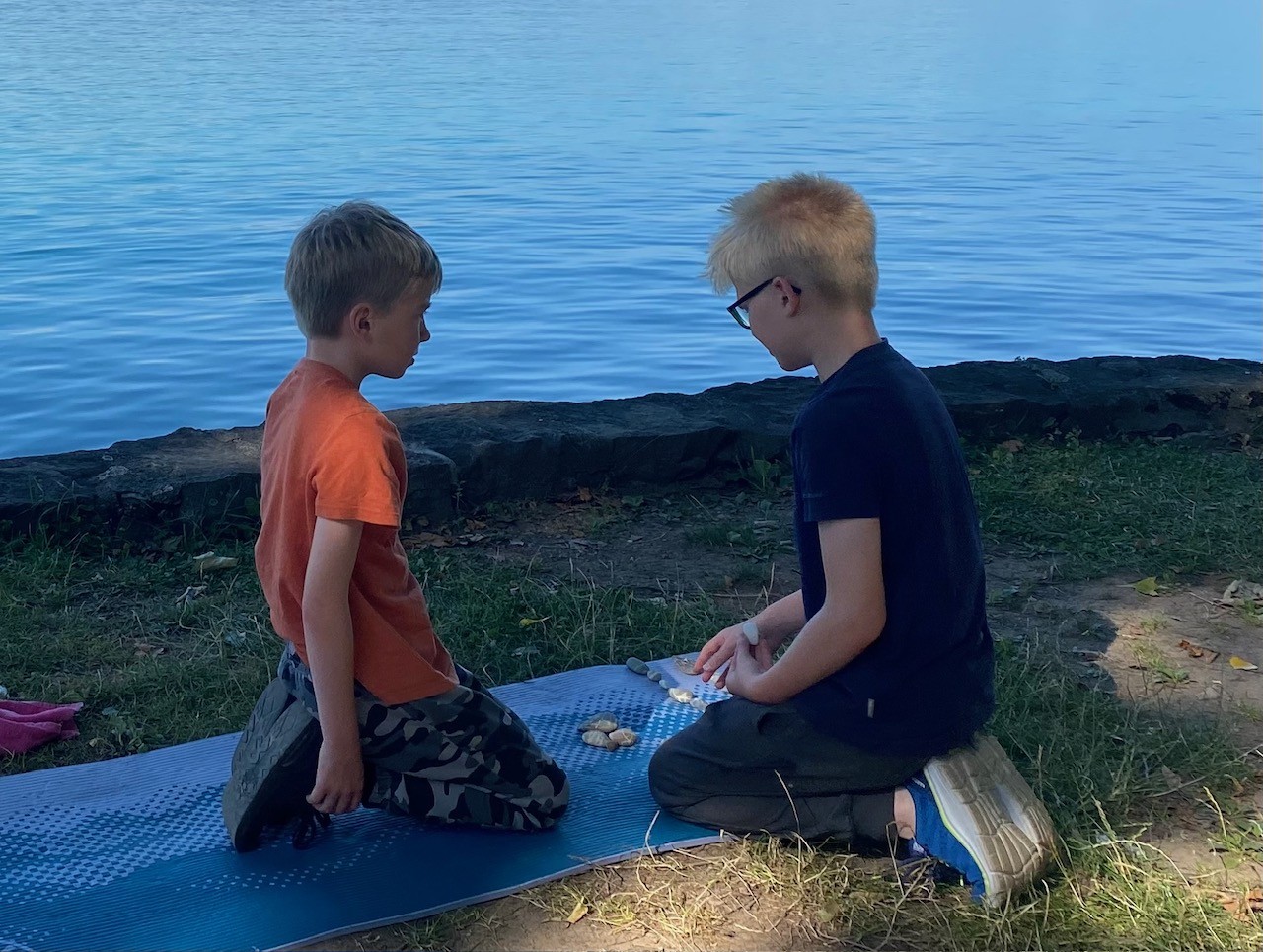
Playing with pebbles (source: author)

What do you remember about lunchtimes at school?

The meals were one thing, but what really stands out in my mind’s eye were the kickarounds.  At my primary school in Cardiff, we played on grassy fields which we shared with the ‘Welshies’ – the neighbouring primary school where lessons were taught in Welsh.  At secondary school, we played on tarmac, and we were only allowed to play with tiny footballs, but the games were jumpers-for-goalposts affairs, and all were welcome – even me with my awful skills.  The games were a welcome break from my studies.

When I do lunchtime break duties at school today, it’s great to see hundreds of pupils still having kickarounds, with a few younger ones playing tig.  There’ll also be games of tennis-ball cricket, and on the sidelines a few younger girls will be doing some kind of dance or singing a song that I’ve never heard of.

And my sons’ main talking points after a day of primary school often mention the games they played at break time, in after-school clubs, or in PE.  It’s also great to hear about how so much of their learning takes part through the medium of outdoor play – whether that’s chalk-drawn times tables on the tarmac or orienteering with quiz questions at every checkpoint.

Is play being squeezed out of schooling?

But overall, and with some admirable exceptions, play seems to be being squeezed out of schooling, in the name of behaviour management, squeezes on funding and staffing, health and safety concerns, and in some cases owing to the reduction of available green space and even asphalt playgrounds.

Research has highlighted the problems of declining lunchtimes and breaktimes at secondary schools – one of which is the restriction of children’s instinct to play.  An older friend of my son reports taking a packed lunch, not because the school meals are bad, but so that in the half an hour allocated to lunchtimes, he can snaffle down half a sandwich and then spend the remaining 25 minutes playing football.  A teacher at another school reports that their students barely have any time to step outside and burn off some energy between their rigid ‘family meal’-style lunch and their disciplined but time-consuming queuing system prior to afternoon lessons.

Decline of play outside of school

You may think that such arrangements are fine because children can play outside when they get home.  But, in a trend which Jonathan Haidt pointed out started in America, parents and other caregivers have been increasingly reluctant to let their children play outdoors, especially in unstructured, independent play.

Some of this is down to a trend towards directing children towards more organised extra-curricular activities for fear of them missing out on some skill or other.  Some of it is due to an exaggerated fear of external dangers such as violent crime.  And some of it is due to a well-intentioned but ultimately psychologically harmful desire to protect our children against getting injured.

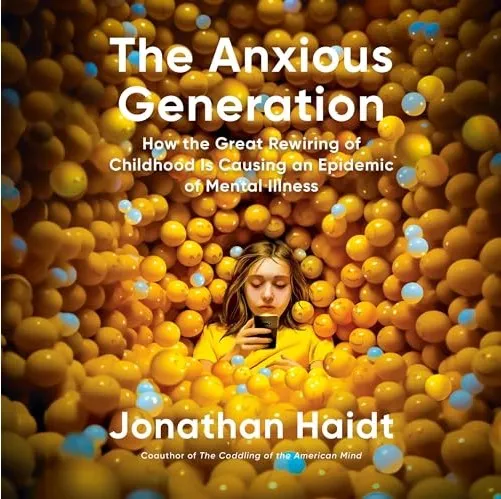
Jonathan Haidt’s book, The Anxious Generation (source)

In parallel with this trend towards overprotectiveness, Haidt, in his book, ‘The Anxious Generation’, demonstrates that increased use of smartphones and other screen-based activities amongst children since the early 2010s has resulted in fewer opportunities for children to play together, whether indoors or outdoors, and therefore fewer chances for them to learn how to socialise and to manage risks.

Parents and teachers have recognised the challenges – and indeed dangers – of excessive use of screens for years.  And schools are getting better at setting rules and advising parents on how to manage screen time.

Big tech companies

However, Haidt argues that most of blame for this squeezing of playtime lies with big tech companies.  They built their business models on hooking adults, and now they go to great lengths to hook children on smartphones to both maximise their revenue and cultivate future avid screen users.

Mobile phone usage – a timebomb for our young people? (Source: Charles Deluvio / Romolo Tavani)
Leniency with age limits, developing algorithms to autoplay videos and posts aimed at keeping the user online, developing child-friendly and addictive games, and encouraging the creation of multi-day friendship ‘streaks’ are just some of the methods used to keep young eyes on their phones and away from the lure of outdoor play.  Haidt recommends new laws and guidelines for tech companies to try to reverse the harms caused by excessive screen time, therefore freeing up our children to play more.

Dare we hope?

But schools have a role too – and not just in terms of phone bans.  And, with the dawn of a new government, dare we hope that policies and expectations will move towards a more play-friendly childhood?  Towards longer breaktimes?  Towards more outdoor learning and field trips?  And all the better if such play takes place in green spaces: recent studies show that wider exposure to such areas reduces behavioural problems, gives children a cognitive boost, and may even improve academic achievement.  This is before we enter the territory of allowing students of all ages more time to ‘play’ with ideas through enquiry-based learning. 

In the meantime, whatever the weather this summer, let’s do what we can to let our children play!

This article first appeared in the Yorkshire Post, 8 August, 2024

Categories
Geography Hopeful Education Optimism and progress Teaching and Learning

Grounds for hope in geography

After several years in gestation, and with the assistance of Elaine Anderson and Richard Bustin, I have distilled my ideas of how teachers may offer students ‘grounds for hope’ for their future and that of the world into an article for the Spring 2024 issue of Teaching Geography journal.

I have been inspired by many people, among them the psychologist Maria Ojala, who argues that fostering ‘constructive hope’ can enhance students’ engagement with issues of sustainable development, and David Hicks, who has written much on the topic of hopeful geography over the past couple of decades.

I take Hicks’ work further by drawing more heavily on global scale examples of ‘social progress’ to improve students’ aware of ‘big picture’ changes. I foreground Max Roser’s ‘three truths’ argument: the world is awful, the world is much better, and the world can be much better (see below):

The article also features resources which can help teachers to keep their understanding of global social trends up to date, including Gapminder, Our World in Data, and Pixels of Progress and in doing so it recognises the legacy of inspirational public health professor Hans Rosling.

A number of teaching resources which could be used by teachers wanting to engage with hopeful geography are featured in the article and as downloads; I have trialled all of them in schools (one example of a student’s future timeline is given as an illustration).

I give the threefold concept of hopeful geography, which can be taken further as the foundations of a hopeful education. I have written about this elsewhere in this blog, although my ideas evolve over time. I advocate for a curriculum which enables our students to do three things:

  1. Evaluate progress
  2. Believe in humanity
  3. Create a sustainable future

Any approach to education should be open to criticism, and hopeful geography is no exception. I acknowledge several concerns, most notably the accusation that it could lead to complacency, and I try to address each one.

As the article went to press, Hannah Ritchie’s book ‘Not the End of the World’ was published, and whilst it too is not exempt from critique, the guiding message of that book chimes with mine: it is helpful to open the possibility to our students that they might be “the first generation to build a sustainable planet” – and as geographers, there is no better opportunity than now to inform and inspire this generation.

Categories
Geography Teaching and Learning

Culture-led regeneration in Bradford

My article in the February 2024 edition of Geography Review outlines culture-led regeneration, assesses its impacts, and evaluates the need for regeneration in Bradford. It also outlines plans for Bradford’s year as the UK City of Culture in 2025. I’m proud that the editorial team made it the cover story (see above).

In this article, I differentiate between regeneration structures (the long term conditions necessary for areas to thrive, such as physical and social infrastructure, and policies such as taxation and immigration) and regeneration strategies (which tend to focus on one area for a time-limited period). The UK City of Culture scheme falls into the latter strategy. Culture-led regeneration is an increasingly popular strategy: it refers to attempts to use arts, music, literature, and often sport too, to attract people and investment to an area.

The success of Liverpool’s year as the European Capital of Culture in 2008 encouraged the UK government to launch its own City of Culture competition, the winners of which are shown below: 

YearCity
2013Derry-Londonderry
2017Kingston-upon-Hull
2021Coventry
2025Bradford
Winners of the UK City of Culture Competition

The UK provides cities (or regions) with funding to prepare a bid, and winners receive several million pounds to make their plans into a reality (Bradford will receive at least £3 million).

Plans for Bradford include making the most of the revitalised City Square, Bradford Live arena, the Alhambra and St George’s Hall, and many more venues across the borough. Themes will include ‘City of the World’, ‘Coming of Age’, ‘STEAM powered’ and ‘Welcome Home Sexy!’ – the latter refers to grafitto which visitors to the city could see when they arrived at Bradford Interchange train station (see above).

Critiques of the culture-led regeneration include discussions of the ethics and efficacy of spending money on cultural offerings when social needs may be more acute, and concerns that the laudable aims of culture-led regeneration may have been taken advantage of by big business. Oli Mould’s critique is featured in the article.

For the full article, you or your school should subscribe to Geography Review: https://www.hoddereducationmagazines.com/magazine/geography-review/37/3/geography-review-61/

I’d like to thank Shanaz Gulzar, the creative director of Bradford2025, for her help in putting together this article.

Categories
Assemblies Geography Hopeful Education Optimism and progress Teaching and Learning

Grounds for Hope workshops

“The session was outstanding and incredibly thought-provoking.  … I would definitely invite David back to deliver more sessions; he has a calm and inspiring delivery that makes you ‘hang on his every word’.”  Mike Smith, Curriculum Director of Geography, Meridian Trust

Looking for inspiring CPD for your teachers? Or hopeful and hands-on sessions for your students?

Read on to find more about how I have worked with schools and trusts and how I might work with you.

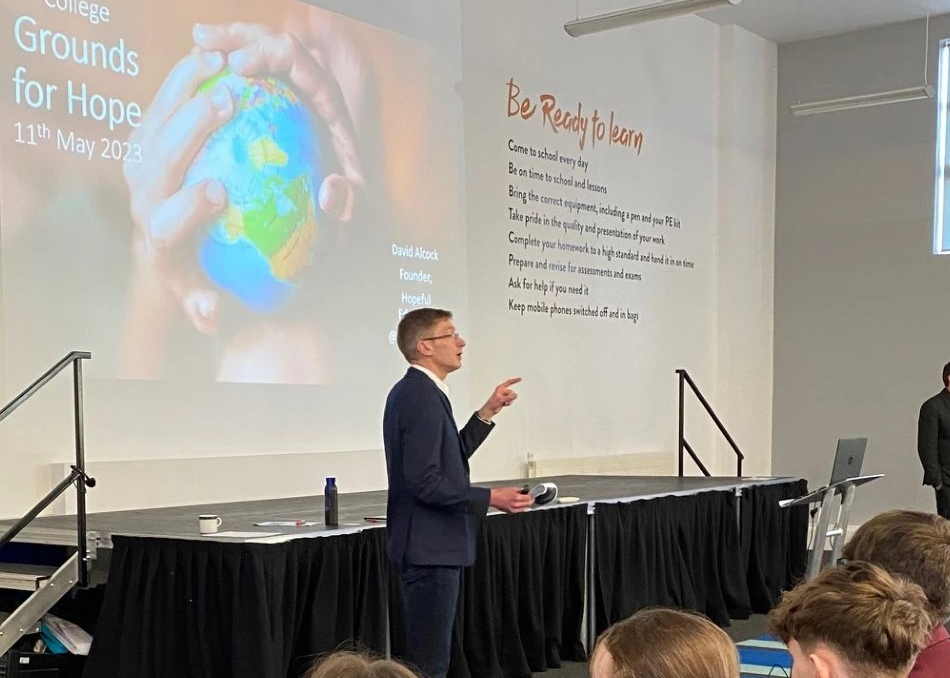
I run sessions for students and teachers, highlighting how people have come together to overcome global challenges, and how your students might be emboldened to play their part in doing so in the future.

Testimonials

“A uniquely informative and thought-provoking initiative … A must for any school wanting to empower young people.” Houry Stewart, Assistant Principal, Fulneck School

“Unique and engaging… well-paced and interactive” Ross McOwen, Head of Year 13, Bradford Grammar School

“Hopeful Education provided us with some really eye-opening and thought-provoking Grounds for Hope sessions.  The students were fully engaged and ready to take action after these very hopeful sessions.”  Lisa Lott, English Teacher and Sustainability Co-ordinator, Hathershaw College, Oldham

“An excellent CPD session… a blend of theory and practical strategies on the art of being more hopeful… The feedback from all staff was highly positive.”  Richard Hart, Assistant Principal (Research & Development), Dixons Academies Trust

“Pupils enjoyed a thought-provoking morning reflecting on how the world has in fact improved, even when the 24-7 news cycle seems to suggest things are getting much worse.  Pupils came away from the morning feeling much more optimistic about the future – thank you!” Sam Haslam, Deputy Head (Academic and Staff Welfare), Portsmouth Grammar School

What is ‘hopeful education’?

Hopeful education first involves listening to students’ hopes and fears for the future of the world.

It then encourages them to evaluate where humanity has come from, to celebrate its achievements (e.g. protection of rights, increases in nutrition and life expectancy, reductions in infant mortality rates, deaths from war and hazards), and to believe in humanity’s potential to solve current challenges.

Finally, it encourages students to play their part in creating a sustainable future for people and the planet.

What do these sessions typically involve?

‘Grounds for Hope’ talks and sessions are tailored to each audience.  They can last from assemblies to a full day session, and they can be delivered to students from across the secondary school age range.  Prior to sessions, I issue a simple Microsoft Forms survey to participants where I gauge their hopes, fears, and awareness of global trends.

In a typical half-day session, I voice and recognise the students’ concerns from the survey, then attempt to contextualise them in the ‘big picture’ of global patterns and long-term trends.  I also look at how psychology, the media, and education all play a role in influencing young people’s worldviews.  I highlight past successes in overcoming challenges, such as smallpox and polio, malnutrition, extreme poverty, acid rain, and several types of discrimination.

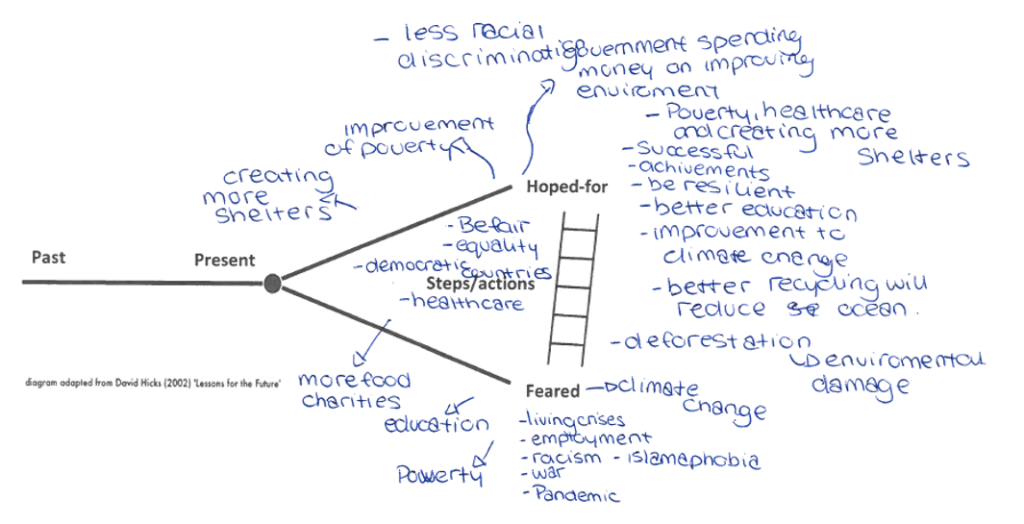
Example of student future timeline, Hathershaw College, April 2023 (Lisa Lott)

I accentuate the role played by a range of stakeholders in the way these have been overcome (such as the UN, scientists, and pressure groups), and, with the use of hands-on techniques such as group-created future timelines (see above for an example) and ‘future headline’ writing, students are encouraged to play their part in envisioning and creating a better future for people and the planet.  I sometimes work with other teachers to deliver these sessions.

What about my CPD sessions to teachers?

I also deliver CPD sessions to teachers (whole-school and geography-only), to investigate the issues of worldview formation and to discuss the role of education in fostering ‘hopefulness’.

These have been between 30 minutes and two hours, and have been in-person and online. Most value is gained by in-person sessions of at least an hour’s duration.

What is my conception of hope?

In these endeavours, I emphasise that hope is active, and that it can be the tough option compared to despair on one hand and optimism on the other.  I also take care to acknowledge the seriousness of the local, regional, and global challenges facing our young people and the world they will inherit.  Nevertheless, following Rebecca Solnit’s lead, I seek to highlight ‘Hope in the Dark’ and believes that there are several positive global trends which should indeed give our young people ‘grounds for hope’.

What is my background?

I teach Geography and in my twenty years in the profession, I have held roles as Head of Department, Head of Faculty, and Head of Outdoor Education, as well as Sixth Form and Teaching & Learning positions.

Geographical Association Annual Conference and Exhibition, Sheffield Hallam University, April 2023 (Shaun Flannery)

I have written on ‘hopeful education’ and ‘hopeful geography’ for the TES, Impact, Geography Review, Teaching Geography, and on these and other themes in the Yorkshire Post and on alcock.blog.  I run ‘Grounds for Hope’ days at secondary schools, and I present and train teachers on these themes via CPD sessions and materials commissioned by the Geographical Association.

I am undertaking PhD research at the IoE on the themes of progress and the future in geography education, I assist in the delivery of the PGCE Geography course at Huddersfield University, and I engage with academic developments in the field of curriculum, pedagogy, and futures education.

Do you want to find out more?

Please contact me: alcock_david@hotmail.com

Follow me on X/Twitter: @DavidAlcock1 / @HopefulEd

Please find below the full text of testimonials received for both Grounds for Hope sessions and CPD sessions for teachers.

Grounds for Hope sessions

“A uniquely informative and thought-provoking initiative that helps young people recognise the hidden web of connection we have with nature’s systems and encourages them to think about the impact their choices can have on the future of humanity. A must for any school wanting to empower young people.”

Houry Stewart, Assistant Principal, Fulneck School, Leeds, October 2021

“For the past three years, David has led unique and engaging Hopeful Education enrichment and Personal Development days for our Year 10 and Sixth Form students. Always keen to ensure that he responds to the age-appropriate needs of our students at each key stage of their education, David has tailor-made Grounds for Hope sessions ranging from whole-school assemblies or year group focused sessions to smaller workshop carousels in both indoor and outdoor settings. David’s well-paced and interactive provision has addressed topics such as climate change and attentively responded to students’ hopes and fears about the future. I look forward to welcoming David to work with our students again soon.”

Ross McOwen – Head of Year 13 – Bradford Grammar School, June 2021

“Hopeful Education provided us with some really eye-opening and thought-provoking Grounds for Hope sessions.  The students were fully engaged and ready to take action after these very hopeful sessions.”

Lisa Lott, English Teacher and Sustainability Co-ordinator, Hathershaw College, Oldham, May 2023

CPD sessions for Geography and other teachers

“David provided an excellent CPD session on Hopeful Geography and Active Hopefulness at our Dixons Conference in February 2022 to 30 geography participants from across all Dixons Academies in Yorkshire and the Northwest. The session was a blend of theory and practical strategies on the art of being more hopeful when teaching geography. The feedback from all staff was highly positive. The session has enabled us to review and refine our curriculum offer through small tweaks, but with impactful results on the narrative that we are communicating within geography.”

Richard Hart, Assistant Principal (Research & Development), Dixons Academies Trust, W Yorks, Feb 2022

“David delivered his session: “Grounds for Hope in Geography” to all of the Geography teachers in our multi-academy trust.  The session was outstanding and incredibly thought-provoking.  David provided excellent resources and practical examples of how the theory around being more ‘hopeful’ in a subject that often has to discuss ‘doom and gloom’, could be implemented with students, either as whole-school activities, or in a classroom setting.  I was impressed with the amount of knowledge David was able to impart, whether than was knowing a variety of examples of ‘individual stories’, to the wider body of literature that has been written about this subject.  It was also impressive that David was able to communicate the critiques of his research, articulating that he really has thought of alternative viewpoints.  I would definitely invite David back to deliver more sessions; he has a calm and inspiring delivery that makes you ‘hang on his every word’.  Thank you David.”

Mike Smith, Curriculum Director of Geography, Meridian Trust, Nov 2023

Categories
Teaching and Learning

Education’s encounter with Artificial Intelligence

The whole world in their hands? Educationalists are considering how they might embrace AI as closely as their students are. (Image source: Adolfo Eliziat)

ChatGPT is here to stay – so how might we embrace it?

Their hands rose tentatively at first.

But the secret was out: some of my students had already come across the artificial intelligence app Chat GPT, and a couple of them were even willing to admit using it to help with their studies (not in my subject, of course!.

If you are a secondary school teacher and you haven’t tried it yet, then I advise you to “wake up and smell the AI”.

Since its launch at the end of last year, educationalists have been wondering about how their practice might be impacted by this free, online, Artificial Intelligence application.  For those who aren’t aware of it, it allows you to type in a question and within seconds it produces a tailor-made answer.  Several teachers have reflected on how it might help teachers work (more on that later). But how will it affect the tasks that we set our students, and what might the longer-term implications of this technology be?

Sober analysis

The initial frenzy of speculation about ChatGPT has now subsided as teachers and school leaders have embarked on more sober analysis of its implications.  This has been assisted by the fact that the ChatGPT application was been overwhelmed by in January and was offline for much of the month.  It is currently being eased back into operation so it can cope with users of all shades and stripes (including, yes, numerous students).  And the tone among educators has already shifted.

Yes, there has been an acceptance that we will have to move away from setting students recap and past exam paper questions to complete at home.  But this should have been the direction of travel for years, thanks to the increased sophistication of online search engines and the common practice of students sharing responses with each other, not only in person, but also via social media.

And yes, the current model of coursework, let alone qualifications which are largely or wholly based on written reports, such as Extended Project Qualifications, will have to be significantly rethought.  Examination boards will need to grapple with increased urgency whether they can reform their qualifications, perhaps moving towards intensive ‘in-house’ write-ups of geography and history investigations.

Workarounds and opportunities

But there are several other workarounds, and indeed opportunities, that teachers and schools can employ in the light of ChatGPT.  Some involve meeting its challenges and circumventing the risks of plagiarism. These include:

  • Adopting ‘flipped learning’ more wholeheartedly. Its benefits are already well known, but this might be the time to embrace it. Flipped learning involves asking the students to research, consolidate, and tackle simpler tasks at home, freeing up class time for higher value-added and/or interpersonal tasks such as evaluation, discussion, and decision-making.
Flipped learning frees up classroom time for more active learning opportunities (Image source: Teachers with Apps)
  • Setting tasks which are bounded by local and up-to-date limits. This is because ChatGPT is, at the moment, fed by data which was online in 2021.  For example, these four tasks stump it:
    • “Write up today’s experiment”
    • “What three things did you learn from today’s lesson?”
    • “What were the geopolitical challenges of 2022?”
    • “To what extent is Ilkley economically inclusive?”
  • Changing the format:
    • Holding more discussions – for example, Harkness discussions – and consider setting oral assessments
    • Trying alternative formats for work, such as sketching, photos, paired work, and videos
    • Running students’ answers through an AI detection software – the pre-eminent one is Edward Xian’s ‘GPT Zero’, which gives a ‘perplexity score’ – the higher the score, the more likely it is that text has been written by a human; GPT-2 Output Detector is another.In OpenAI (the creators of ChatGPT) also say that they are planning to run a ‘watermarking’ scheme so that AI-generated answers can be flagged up to consumers.

Additionally, as commentators such as Daisy Christodoulou and Evan Dunne have pointed out, we can also use ChatGPT to help us with a variety of our everyday tasks, and to enhance our teaching.  We can use it to help us to mark, set quizzes, and write lesson plans and assemblies, and so on.

We can also encourage students to critique answers generated by ChatGPT, and discuss how they might be improved. Might we even see a return to examination boards adding the word ‘flair’ to their mark schemes for longer answers?  This is something that a chatbot cannot easily demonstrate – yet!

The human side of education

Image from the Eco-Capabilities project (Image source: Nicola Walshe, via EcoCapabilities)

Let’s take a step back for a moment, though, and look at how the wider educational landscape may be shaped by this app, and by its later iterations – not to mention the products of competitors like Google’s DeepMind.

Like it or not, AI will probably end up taking some of the control away from how we help students encounter knowledge about the world. In response, educators should take the opportunity to develop – and shout about – the human side of what we do.  What a world of opportunity this could open up!  We could develop into an army of well-respected teacher-facilitators, ushering in the next generation of critical thinkers.

We could also open curriculum breathing space, freeing up time from unrelenting knowledge transmission, and directing our energies into developing more rounded young people.  They could be given more time to pursue the arts, sports, and outdoor learning, and to develop ‘eco-capabilities’ to reconnect with nature.

Let’s be bold as we contemplate how we might harness ChatGPT’s powers, not only to make teaching more efficient and relevant for our students, but also how we might work towards a more humane, caring, and sustainable future for everyone.

This post was developed alongside a presentation given to staff at Bradford Grammar School on 18 January 2023.

Categories
Geography Teaching and Learning

Slaying the zombies that prowl our minds

Zombies as portrayed in the movie Night of the Living Dead (Source: Wikimedia)

How many zombie ideas prowl our minds?

There are many stories about the undead, rising from the grave to threaten us when we thought they’d gone away.  All entertaining enough, and darkly comedic too.

But there are other zombies too – zombie ideas.  As Australian economist John Quiggin notes, “Some ideas live on because they are useful. Others die and are forgotten. But even when they have proved themselves wrong and dangerous, ideas are very hard to kill. Even after the evidence seems to have killed them, they keep on coming back.”

It’s tempting to believe that all of what you learnt at school still holds true today.  This may be correct in most cases.  But whatever age you are, so much of what you learnt is out-of-date, yet it re-emerges as a zombie idea later in life.

Zombie ideas in education

As a Geography teacher, I am acutely aware of the need to slay these zombies and to keep up to date with developments in the human and natural world since my own school days.  So, for example, the idea that the world is split into a rich ‘north’ and a static, impoverished ‘south’ should be replaced with a more dynamic and complex picture.  Similarly, my understanding of why tectonic plates (slabs of the earth’s crust) move has, thanks to educators like Alistair Hamill, moved beyond simplistic models of ‘convection currents’.  And whilst many teachers (like me, until recently) like to portray Thomas Malthus as a pessimist who saw population growth forever curtailed by famine and war, he actually had more nuanced views.

In education, teachers have been subjected to several discredited initiatives.  These include the notion of ‘learning styles’, which categorises pupils as either ‘visual’, ‘auditory’ or ‘kinaesthetic’ learners.  Veteran teachers will regale you of lesson plans which needed to address all three styles of learning, or even of pupils wearing badges indicating their status.  The ‘zombie idea’ of each pupil having a preferred learning style has since been dismissed, yet it persists in some corners of the system.

Why do we accept certain ideas?

We shouldn’t be too harsh on ourselves, as it is very tempting to accept certain ideas.  Some of them seem to be ‘common sense’, and therefore they appeal to us, as we often default to the simplest explanations.  Other ideas remain with us because we are wary of challenging them, as we were introduced to them by a figure of authority, such as a teacher or a parent.

Some ideas become accepted because they are repeated so many times, and in so many places, that we find it hard to believe that so many people can be wrong.  One of these ideas, Quiggin writes, is ‘trickle-down economics’: the idea that policies that benefit the wealthy will ultimately help everybody.  This idea had its heyday in the Reaganite and Thatcherite 1980s and 1990s, and this zombie was briefly resurrected by Liz Truss, despite being rejected by most economists.

Often, though, ideas persist because there is no reason to challenge them: they don’t seem to interfere with our daily lives, and so we just carry on living with them.  But it is important to continually reassess our ideas, to see which ones are zombies, and which ones deserve to live on.  This is especially applicable to the most persistent zombie ideas – those that are still with us because it takes a lot of time and effort, and a readjustment of our worldviews, to believe otherwise.

Slaying the ‘It’s natural!’ zombie idea

One such persistent zombie idea is that contemporary climate change is natural and that we are powerless to act.  Most of us now accept the ‘inconvenient truth’ that human activity has caused the recent extremely rapid rise in air temperature and the number of extreme weather events.  However, hardly a week passes when a columnist, letter writer, blogger, or ‘professional contrarian’ like Julia Hartley-Brewer resurrects the zombie idea of natural factors being behind recent changes in our climate.

Yes, our climate has changed significantly through the ages, but the pace of change in recent years is unprecedented.  It is incredible to still be writing this in 2022, but the climate science is clear: humans are behind the most recent period of warming – according to the IPCC, “Observed increases in well-mixed greenhouse gas (GHG) concentrations since around 1750 are unequivocally caused by human activities” – and excess carbon dioxide and methane in the atmosphere mean that rises in temperature are baked into the atmosphere for decades to come, threatening civilisation and the biosphere alike.

Whenever and wherever you see the zombie idea of ‘natural climate change’ raise its ugly head, ask yourself why it is being expressed.  Is it to achieve notoriety and payment for expressing outrageous views?  Is it to protect vested interests in a certain way of life?  Or is it because insufficient time has been spend critically examining the idea?

This autumn, let’s launch this zombie onto the bonfire and reset our conversation towards two more urgent aims: how can we control our emissions before we get to an irretrievably awful climatic situation, and how can we ensure that all parts of the world can adequately adapt to the changes that are already underway, and that will be with us in the future?

Categories
Assemblies Hopeful Education Optimism and progress Teaching and Learning

Global Citizenship – an assembly

Delivered to students at Bradford Grammar School, Friday 1 Oct 2021 

Before the assembly, I put a card and a pencil on a dozen seats along the middle row of the assembly hall, saying ‘Complete the sentence: “I am a citizen of…”.’ I had also asked my Year 12 tutees to do the same the previous day. 

Slide 1 – Global Citizen symbol

I wonder if anyone recognises this logo.  Tell the person next to you if you think you know what it represents. 

Slide 2 – Images from Global Citizen Live

A week ago, there was a global series of concerts, from London to Lagos, from Seoul to Sydney, and in many other places in between.  The event was called ‘Global Citizen Live’.  

But what exactly does being a Global Citizen entail, and why do many people believe that we should develop a ‘Global Citizenship’ mindset?  

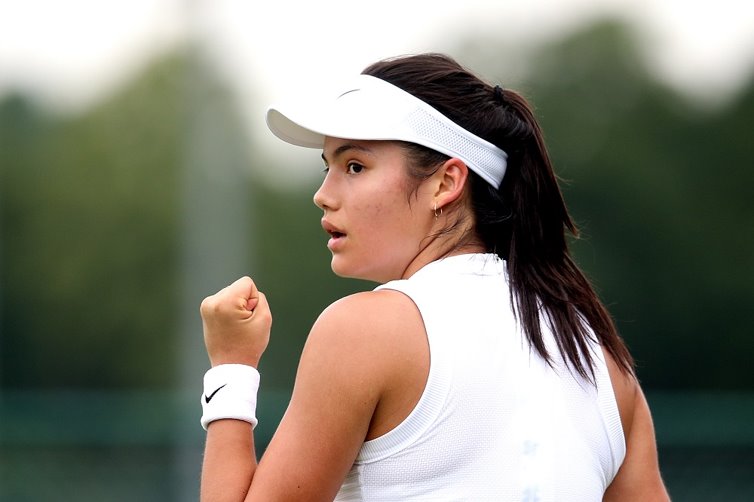
Slide 3 – Emma Raducanu

Let’s start with this young person, Emma Raducanu. 

Professor of Leadership Guido Gianasso wrote these words a couple of weeks ago about Emma: 

A new tennis champion has emerged. 

Emma’s father is Romanian. Her surname is Romanian and she speaks Romanian fluently. Hence she is considered Romanian by millions of Romanians. But Emma has never lived in Romania. 
 
Emma’s mother is Chinese. She speaks fluent Chinese. Hence she is considered a Chinese hero by millions of Chinese. 

Emma was born in Canada but has lived most of her life and trained in the UK.  She holds dual British and Canadian citizenship.  She is considered British by most Britons.  But the British public that now celebrates her success is the same that voted Brexit with the objective to make it difficult for East Europeans such as Emma and her father to live in the UK. 

 At a time when many countries are going back to very ethnocentric models and policies, Emma is the best evidence that … we must embrace a geocentric mindset.  Emma Raducanu represents the future of humankind. 

A geocentric mindset?  What does that mean?  I am more familiar with another way of putting it.  Global citizenship.

A global citizen is someone who is aware of, and seeks to understand, the wider world. They have responsibilities to the world as a whole, as well as to their community or country. 

Slide 4 –  “If you believe you’re a citizen of the world, you’re a citizen of nowhere”Theresa May 

Global citizenship can sound woolly, and indeed our last prime minister, Theresa May, said in 2016 “If you believe you’re a citizen of the world, you’re a citizen of nowhere”.  Some people can see where she’s coming from: if you identify as a ‘global citizen’, they might say, you are abandoning any commitment to more local forms of identity.  

Slide 5 – England fans, showing allegiances to local clubs as well as to their country 

But are these England supporters any less loyal to their local club? The names on their flags seem to show otherwise.

Slide 6 – British Lions rugby players 

And are these British Lions any less loyal to England, Wales, Scotland or Ireland, even though they are playing for a bigger entity?

Slide 7 – BGS school logo

Which groups do you belong to? 

I put cards on some of your seats in the central aisle.  I also asked my Year 12 form members.  I asked recipients to finish the sentence “I am a citizen of…”  Here are some responses: [read out responses] 

[Of the twelve cards which Year 7-9 students had, one said the school, some said their home town, a couple said Yorkshire, some said England or Britain, and one said Earth. My Year 12 form gave a similar spread of answers.]

All of these responses are valid. How can that be?

Slide 8 – The World

Because we can live with more than one identity. 

Yuval Noah Harari points out that some fanatical creeds reduce people to single identities – e.g. fascism prioritises national identity over all others.  But you can be a patriot without denying others their identity. 

He also points out that “Human tribes… tend to coalesce over time into larger and larger groups… in the long run, history’s direction is clear-cut. … In recent generations the few remaining civilisations have been blending into a single global civilisation”.

Harari points out that people still have different religions and national identities.  But when it comes to the practical stuff – how to build a state, an economy, a hospital or a bomb, or how to measure things like time – almost all of us belong to the same civilisation.

Slide 9 – Globalisation cartoon (source)

So if we agree with Harari that we already belong to the same civilisation, why do some people – like me – feel the need to promote global citizenship? 

Well, yes, we already live in a cosmopolitan – or globally shared – condition.  It’s inescapable. 

But as Ulrich Beck pointed out, as a society, we have yet to develop anything like the cosmopolitan awareness necessary for society and the environment to thrive or to operate sustainably. 

In other words, we live a globalised life, but we have yet to take full responsibility for our role in it. 

We too often stick to old allegiances at the expense of other people and the environment.  Let’s look at two examples. 

Slide 10 – Example 1: Covid-19 Vaccinations 

In 2020, the developed nations promised to help less developed countries to vaccinate their populations.  Gordon Brown, another ex-prime minister, insists that ‘No one is safe until everyone is safe’.  It would cost about £70bn to vaccinate the world – a lot of money.  But the cost of not vaccinating the world, in terms of lost productivity, trade, livelihoods, and so on, is estimated to be 50 times bigger, at £3.3tn.  But national self-interest and some degree of corporate self-interest keeps the world from the much cheaper global solution.  

Slide 11 – Example 2: Climate change 

In 2009, the developed world, who industrialised and prospered on the back of a fossil fuel led economy, agreed to pay $100bn a year to developing countries to help them to adapt to a changing climate and to invest in alternative energy sources to help them not commit as much environmental damage as we did.  But very little of this has been handed over.  And again, the cost of meeting the challenge of climate change is much, much less than the social and economic cost of suffering its consequences. 

These are massive global issues requiring huge shifts in our mindset.  And you might be thinking they are beyond you.  

Slide 12 – Recognise, Co-operate, Contemplate

But as you make your way in the world you can be part of this shift in our collective mindset. 

What could you do now though? 

Firstly, you could recognise that on top of your more local identities, you are a citizen of the world. 

But is that enough?  No, because I would argue that truly belong to a group entails responsibilities to that group. 

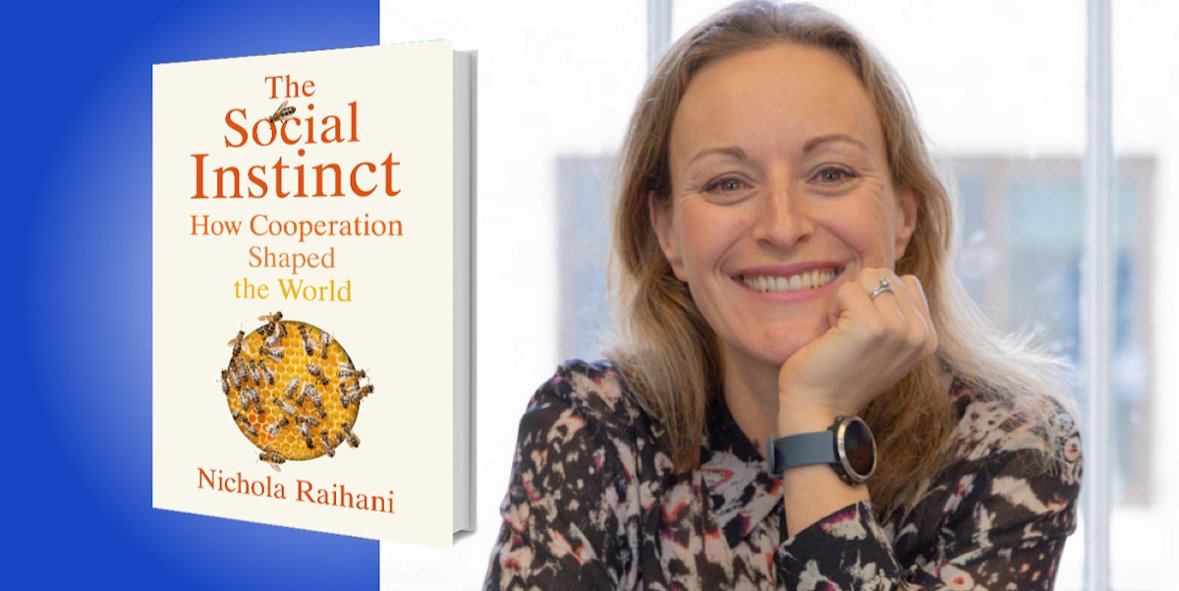
Slide 13 – Nichola Raihani

So the second action you could take is to co-operate beyond your immediate circle.  Nichola Raihani has written about co-operation in the animal and human world.  It’s not a silver bullet to solve all ills, but it’s underappreciated.   She points out that many people are misled by the word ‘selfish’ in the idea of the ‘selfish gene’: in most contexts, the best way to survive and thrive as an individual – to advance your ‘self’ – is to co-operate.  

Slide 14 – Recognise, Co-operate, Contemplate – and act? 

Thirdly, you could use your intellect to widen your horizons and find out more about the steps we’ll need to change our ways to deal with the global challenges of the 21st century, and you may then decide it’s time to act. 

Not only should we ‘think global, act local’, but we should also ‘think global, act global’.   

Slide 15 – There is No Planet B

Let me finish with Mike Berners-Lee, author of ‘There is No Planet B’: 

He says “If our sense of ‘tribe’ doesn’t embrace the whole world, we are going to be in for a very nasty time.  … All of us need to be able to keep in mind our shared and overarching global tribe.  We have to get our heads and hearts around the idea that we are in this together because that is the only way any of us can live well.” 

This image has an empty alt attribute; its file name is image.png
Slide 16 – Global Citizen symbol

Thank you.

[ For a copy of the slides and the scriptContact me on Twitter at @DavidAlcock1, @HopefulEd, or email me – alcock_david AT hotmail.com.

As ever, feedback is welcome. I recognise that there are different conceptions of global citizenship and that cosmopolitanism is a complex beast; I have also necessarily simplified the messages of the people mentioned!]

Categories
Geography Outdoor Learning Teaching and Learning

Education and entertainment? Occupying children in challenging times

Outdoor learning photo

Source: Shutterstock.com, via https://theconversation.com/being-in-nature-is-good-for-learning-heres-how-to-get-kids-off-screens-and-outside-104935 

There has been a boom in advice for parents and guardians over the last few days about what they can do with their children for the upcoming weeks – and probably months – off school.  In my position as a geography teacher, outdoor educator, orienteering coach, and father of two young children, I have some experience at knowing what might work well, and in what context.  Please find below some thoughts and suggestions on how to combine educating and entertaining your children in and around the home in these challenging times.

The basics

Work within the structure that your children’s school has put in place for remote working.  One of the reasons why most school days are divided into different lessons of between 35 and 60 minutes in duration, is because learning, and especially learning in childhood, is more effective in short bursts and when it is ‘interleaved‘, i.e. with learners encountering different subjects and topics throughout the school day, week and term.  But be aware that in a school-based day, children ‘depressurise’ between lessons by chatting to their friends whilst they physically move around the school site; you could replicate this by allowing them 5 minutes to contact their friends and/or to move around (see below for some really short ideas).

Interleaving

Source: https://www.learningscientists.org/interleaving

Children thrive on variety, and this might mean doing several activities in one day – perhaps interspersed by periods of playing educational and not-so-educational computer games and watching CBeebies/CBBC/YouTube (delete as appropriate!).

Be flexible: be willing to go off on a tangent if your child takes you on one!

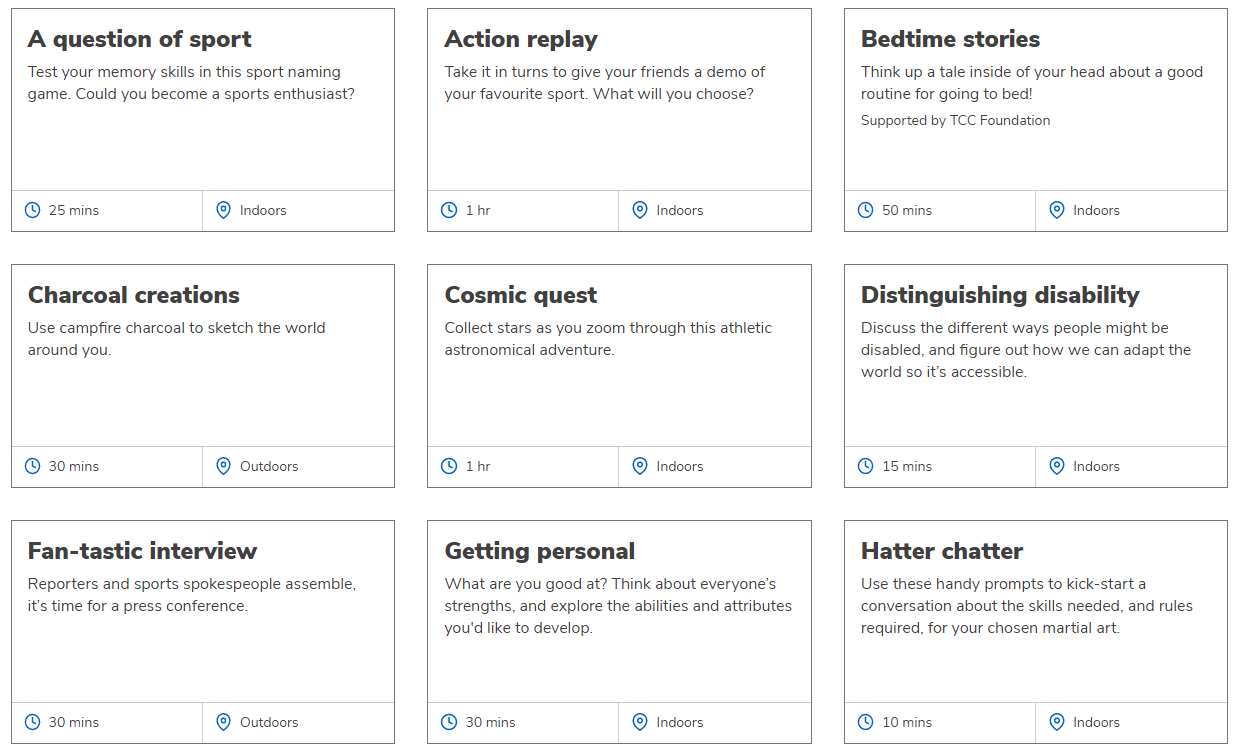
Keep it simple.  Younger children in particular can let their imagination run wild with things as simple as chalk, clean paintbrushes and den-building materials – see below for some easy ideas.

Don’t splash the cash.  You don’t need to spend lots of money: use your school or public library if it is still open, visit charity shops, and where possible, share toys, books and other materials with other families, taking care to disinfect them if necessary.

Use technology judiciously.  Although your children may not like to admit it, they will probably be overdosing on it.  This is not only because most schools will be expecting your child to use technology to receive, undertake and submit work, but also because in place of face-to-face socialising in school, your children will probably want to use social media even more frequently than usual.

Make the most of mealtimes together, and build preparation into your time together (see below).  My children are on the fussier end of the spectrum, so eating together can be a frustrating experience, but at least we have time to talk about things and you might even wheedle out some of their worries (coronavirus included).

Now we have covered some of the basics, what about some practical ideas?

Outdoors

Some people will be able to leave the house, as long as they maintain social distancing protocols – the main one of which is to stay about 2m from other people.  And, most of the time in spring and summer, the increasingly clement weather and lighter days should facilitate this.  The summer term is when many schools run outdoor learning activities and field trips, and the current shutdown means that children are in danger of missing out on these valuable opportunities.  It is important to keep the outdoor flame burning – in all its inquisitive, active, resilience-building, messy, muddy, invigorating glory.  (Inspired by Nicholas Tampio, I reflect on why face-to-face learning works here.)

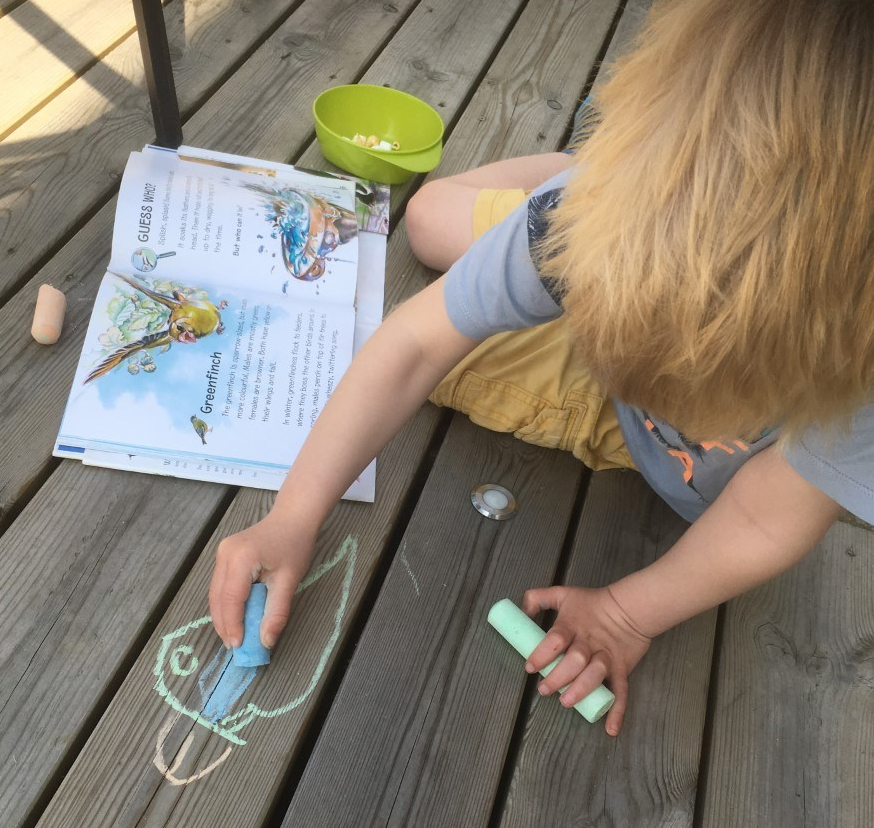
Some of the simplest ideas for the youngest children in your household involve art – for example, paintbrushes dipped in water provide a surprisingly entertaining distraction, and investing in jumbo chalks gives children free rein over your patio and walls:

Chalk drawing

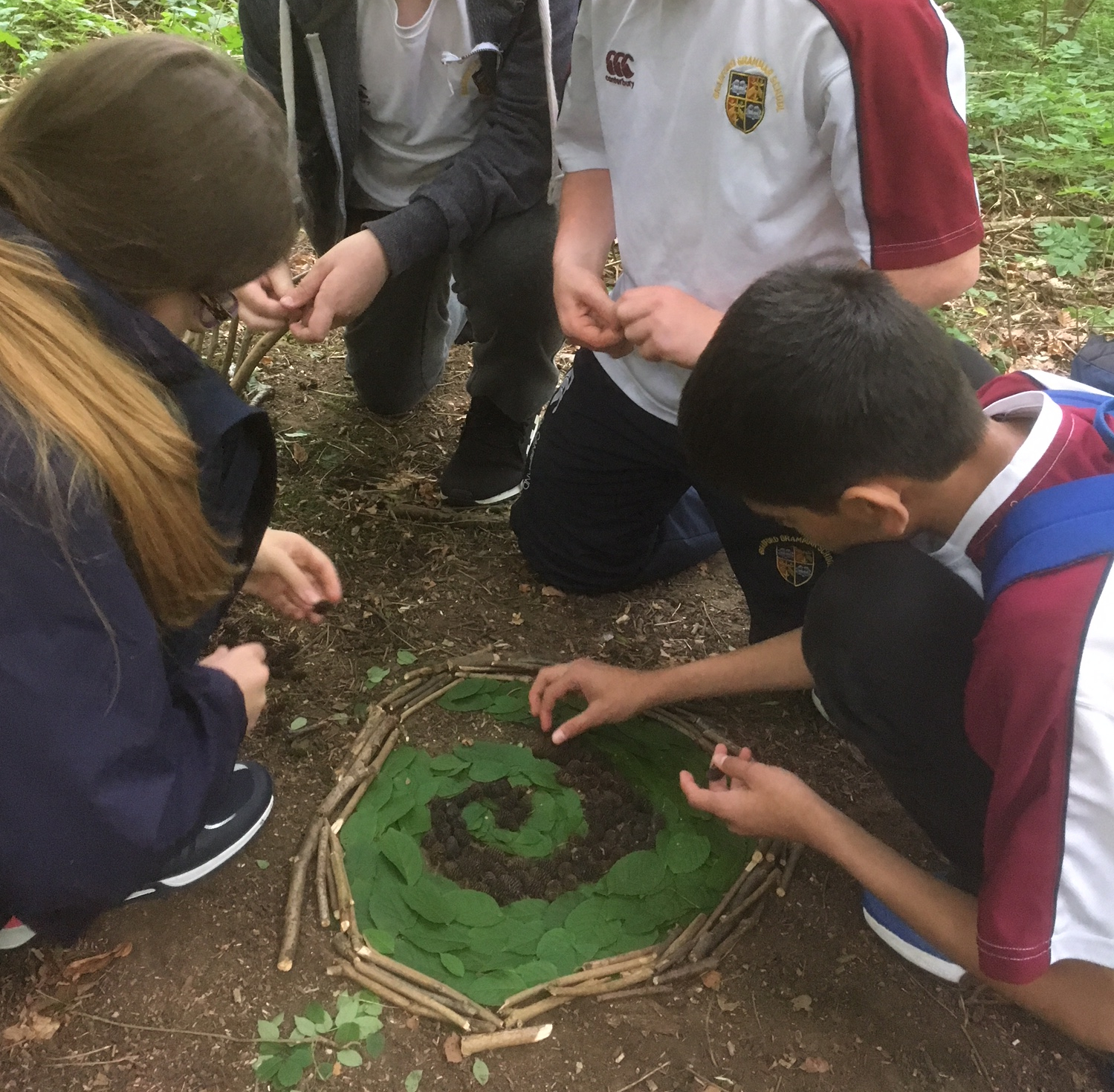
For older children, why not inspire them into producing outdoor artworks in the style of Andy Goldsworthy?  The Art department at Bradford Grammar School develop this idea in the annual Year 9 Outdoor Learning Day:

image4

Easy activities, like gardening, can be tailored into learning opportunities.  These activities include the building of a ‘bug hotel’, and planting bulbs (it’s not too late for some varieties) and vegetables.  The RSPB – which nowadays has a remit which has spread towards the conservation of all wildlife – has many great ideas on their website.  If this inspires you, then it is good to know that anyone can join the RSPB at a subscription rate of your own choice, after which you will receive a folder of activities to do in any season, plus one of two age-appropriate quarterly children’s magazines containing other activities.

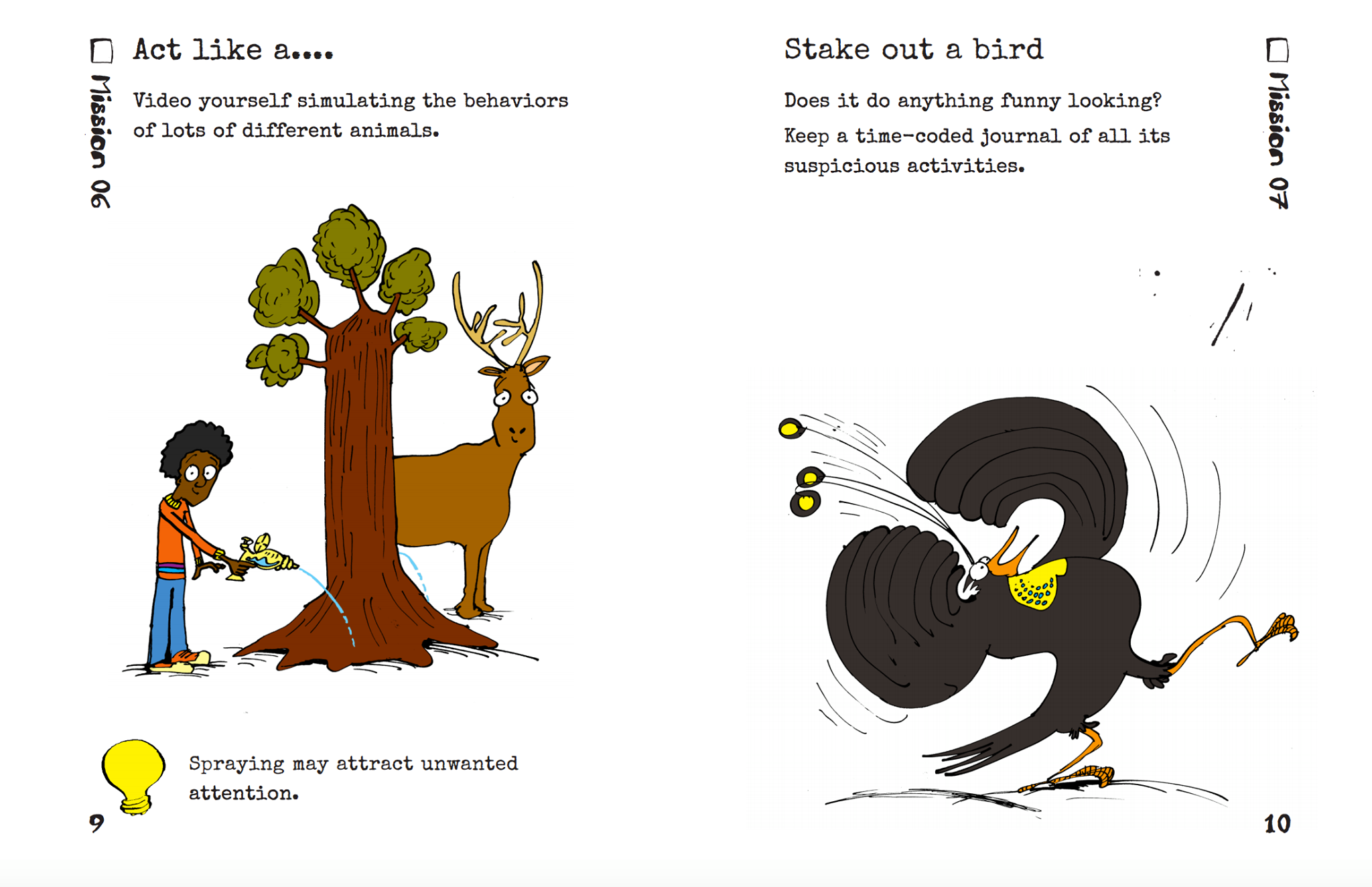
The time is also ripe for children in Key Stages 1-3 in particular to undertake many of the zany activities developed by the Mission:Explore collective.  Some of their books and ideas are available to download for free on websites such as this one or this one, or to buy on Amazon.  Their Facebook page and Twitter account contain archives of many of their activities.  One example is below:

Mission Explore image

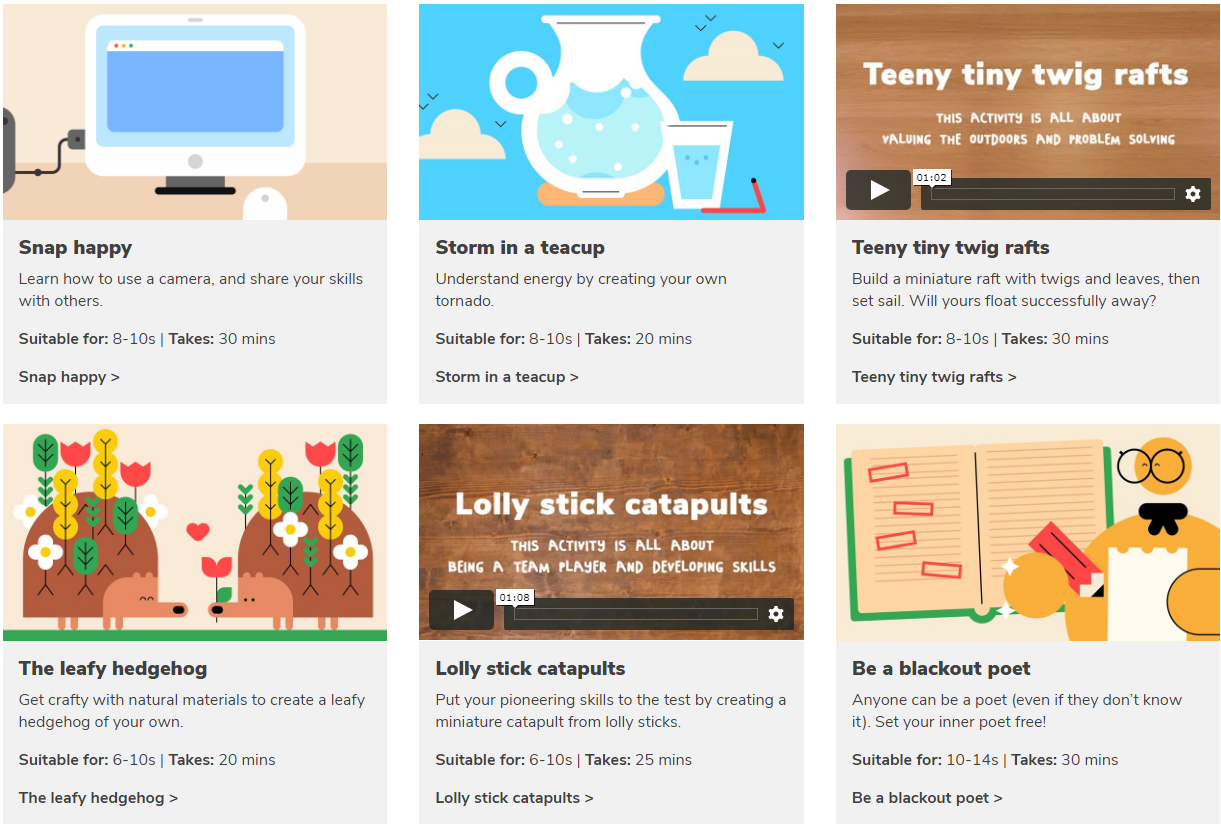
The Scout Association are, of course, experts at outdoor learning, and this page contains hundreds of outdoor ideas, sortable by time, cost and group size:

Great Outdoors

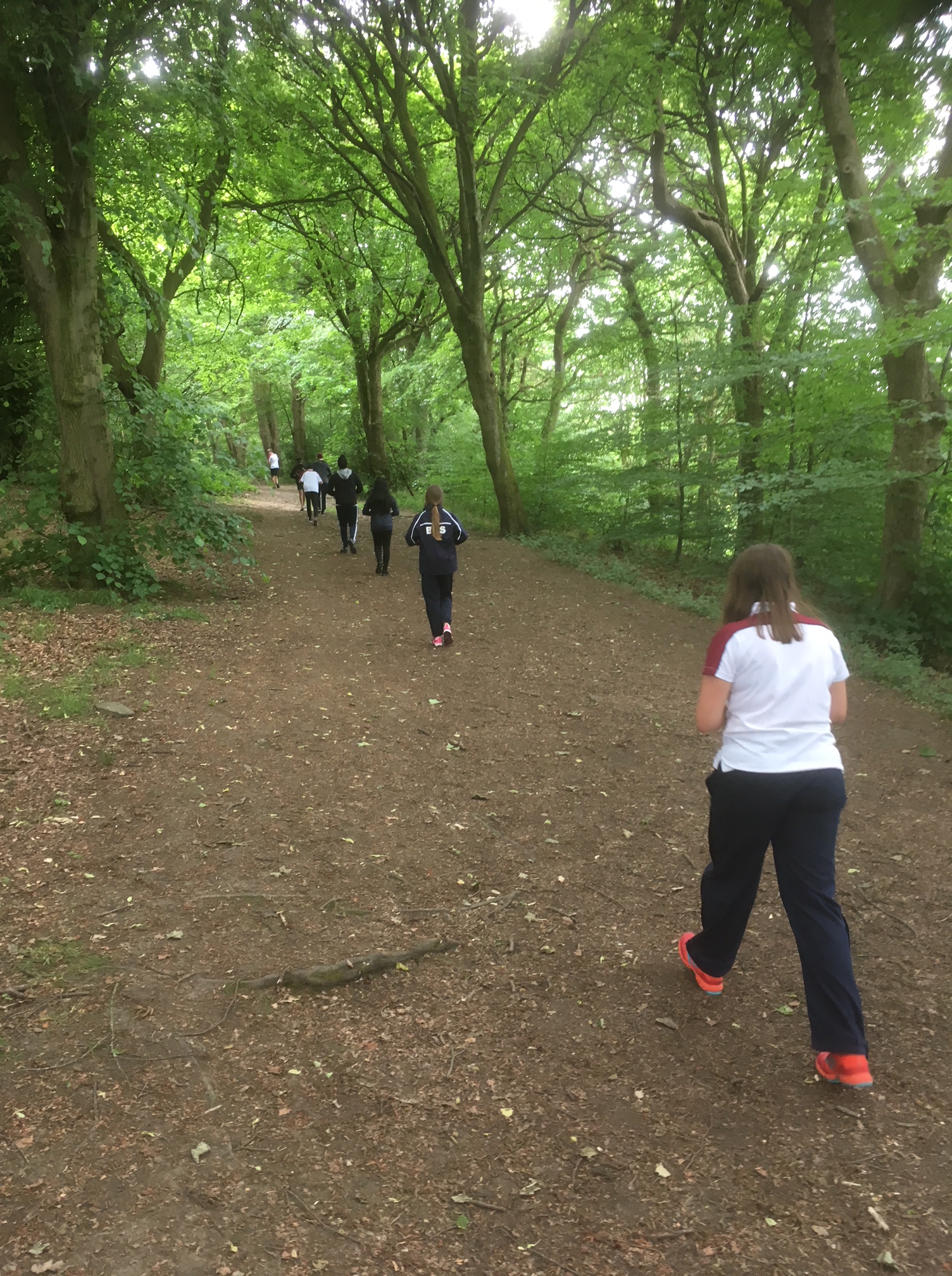
Going out for a walk in the local park or woods may be enough to stimulate your children – and those of any age will need little prompting to make dens or dam brooks.  It has been proven that spending time in green spaces – and especially forests – is great for mental health.  One way of embracing this opportunity is to undertake walking meditation – or what some Buddhists call ‘forest bathing’.  Bradford Grammar students have tried this in the last two outdoor learning days:

image2

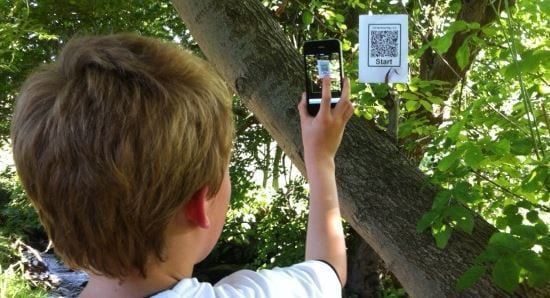
To introduce more intellectual challenge into such trips, why not find and print an orienteering map of these areas, and use it to plan your way around routes of increasing complexity.  There are hundreds of so-called ‘permanent orienteering courses’, with posts to visit – some of which have QR codes to scan to prove you have been to each location – and to add to the challenge, why not run them?  See the British Orienteering website for more information.

POC QR tree

There are more outdoor learning ideas in the Outdoor Classroom Day website – and in some of my earlier blog posts, such as this one.  Finally, the ‘hive mind’ of the Bradford Grammar School staff helped in the collection of outdoor learning activities covered here.

Indoors

Much of the day will, either by choice or necessity, be spent indoors.

Simple pleasures such as reading, practising a musical instrument, or jigsaws, will undoubtedly see a rise in popularity in the coming weeks.  The art of letter-writing, perhaps to an elderly relative, or to friends, may well make a comeback too.

There should be more time for meal planning and preparation in the coming weeks too.  Making a pizza dough, then leaving it to rise, then knocking it back, adding toppings, then putting it in the oven, then waiting again for it to cook, is an easy way to engage children in the structure (and fun) of cooking, as well as teaching them patience!  Older children could also benefit from some home economics practice as part of their move towards independence.

What could pupils do to fill the gaps between lessons, aside from engaging in social media?  Rationing mobile phone usage may well be the best policy, as evidence shows that even having a phone in one’s field of vision can reduce productivity.  So what about those low-tech activities?  Picking up a new physical skill in small doses may be worthwhile – I remember learning to juggle in the five-minute gaps between revision for my GCSEs back in the ’90s!  Engaging in an intense intellectual activity such as a crossword could also be an outlet for older students: more able ones could even learn the art of the cryptic crossword.

As well as their outdoor provision, The Scouts have produced a section on their website called ‘The Great Indoors’, containing over a hundred ideas.  See below:

Great Indoors

For those looking to model real-world phenomena and processes, I recommend a web search for ‘kitchen geography’.  Have a look at this video, for instance, which recreates glacial erosion in your own home!

There will be other people with more experience than me in the arena of arts, crafts and music-making, so I will leave my suggestions here for now.

Good luck, and I hope to be able to put more out there in the coming weeks.  As ever, I welcome your thoughts.

David


Categories
Geography Teaching and Learning

Don’t cut corners, take short cuts!

Primary School Students Raising Hands

Classroom calm.  Source: www.scholastic.com 

“Forget the lectures, this is what you really need to know about teaching”.

I still remember it clearly.  I was part of a group of trainee teachers, at the start of our PGCE course.  We spent half an hour in a DT classroom with a plain-speaking teacher who had been briefed to tell us about how to approach the basics of teaching.  I am afraid I forget his name.  Let’s call him Mr Practical.

Mr Practical said he had worked in industry for a few years then he switched to teaching and had been doing so for nine years.  He said something about nine years being a long time.  Well, I am writing this after spending almost double that length of time and some days I know how it feels!  Anyway, back to the session…

Mr Practical got out a pile of books and a variety of pieces of stationery.  Then he used these as props whilst he rattled through the practicalities of classroom management.  Vygotsky and Piaget could wait.  This is what us ‘new kids’ urgently needed, and Mr Practical knew it!

I am happy to admit that I still make elemental bloopers in my classroom teaching and I pick up hints all of the time.  But thinking back to that session, there are plenty of short cuts to effective teaching in a classroom scenario that I have taken with me.  Sometimes I have gone too far – I have cut corners.  The semantic difference is slight – but crucial.

Cutting corners either short-changes the students, or adds stress on you further down the line, or inconveniences someone else.  Or all three.  Short cuts are about effective practice, freeing you up to teach!

So, in a homage to Mr Practical, and as a way of ‘passing in on’, here are some ways of cutting corners which should be avoided, and some short cuts which you might like to try instead.

Cutting Corners

Short Cuts

Go for the ‘easy option’ of getting the answer from those with their hands-up. Have a (temporary?) ‘hands-down’ policy, or, more straightforwardly, just target a variety of students, so that by the end of the lesson, no-one has been missed out.
Assume all homework has been done.  Until you find out later in the day that it hasn’t.  The cheeky rascals! Open books at the homework page and tour the class to check before they hand it in.  You can ask questions whilst doing this!
Assume you’ll be able to find the right page in their books to mark. Get the students to hand their books in with the pages open at the relevant task, or with a ‘bookmark’ (this could be a flash card which they could update periodically with tricky terms).
Hand out gluesticks/scissors willy-nilly (you will come unstuck, ha ha). Get a ‘keeno’ to be the glue stick/scissor monitor.  Yes, even in Year 11.
Issue mini whiteboards, pens and wipes separately. Bag them up.  Or leave a whole set in a desk tidy for every lesson.
Not doing the register until mid-way through.  Screw convention and regimentation, I occasionally think – but you will have the school secretarial team on your back! Have a seating plan (apart from at A Level).  This will allow you to easily notice any absentees, and you can ask another student if the absentee is on their way or not.  Then you can freeze your display screen and do your blasted register.
Avoid ‘knowledge retrieval’ tests as they are too much hassle and require more copying. Give pupils scraps of old paper, make them verbal, multiple choice, and get them to peer mark.   Or at least make them A5 or A6 size and store them in an envelope in the back of their books.
Get pupils to move around the room every lesson in a bid to keep them active. Make this a treat.  Order and routine are important.  Rather than getting them to move to different stations, pass the sheets around instead – this provides mild entertainment, stimulation and a sense of expectation.
Assume that textbook exercises are doable and indeed logical. Attempt them at home or at least think them through first.  Keep your answer sheet; next time you will have a ‘short cut’ to the answers.
Don’t change your practice. Observe other lessons.  Talk to other teachers.  Get hints online.

More hints – which could be called ‘short cuts’ but which are really just good practice – can be found in this post about how to respond to your students’ desire for help without giving them the answer or stifling their curiosity.

I am, of course, open to suggestions for more – and of criticism (see the last row in the table)!

David